
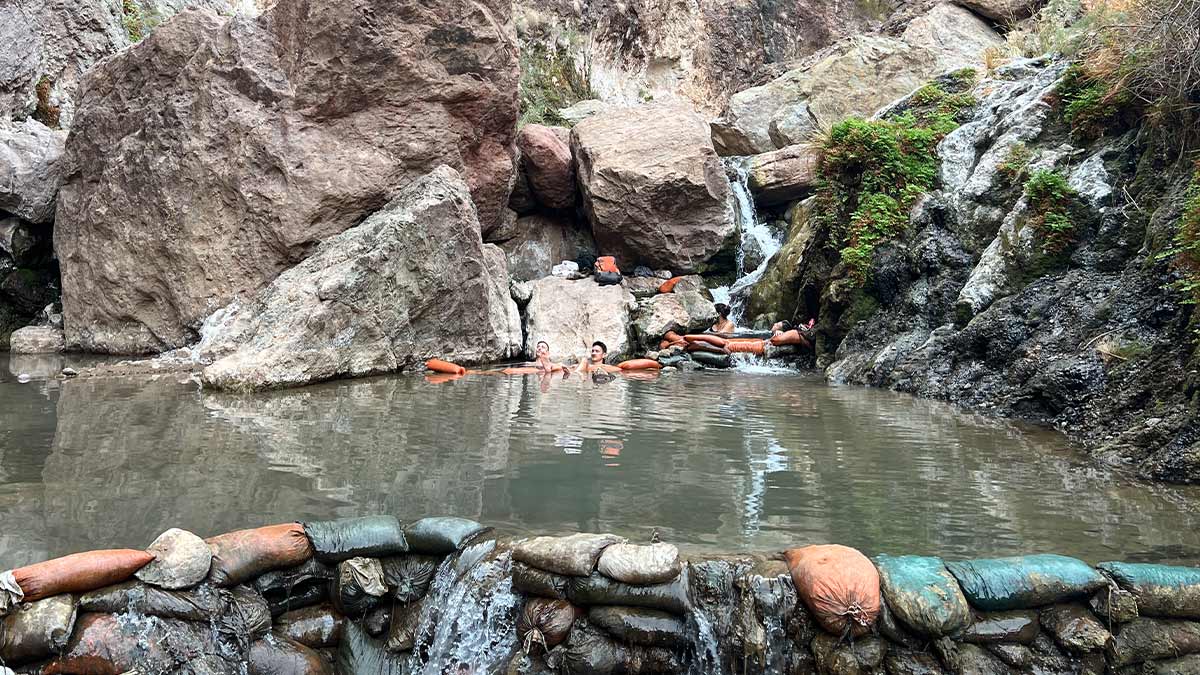
Gold Strike Hot Springs sits at the end of one of the more adventurous canyon hikes near Boulder City. The 5.3-mile round-trip route drops through Goldstrike Canyon toward the Colorado River, with seven dry falls, hands-and-feet scrambling, visitor-installed ropes, and about 1,200 feet of elevation change along the way.
It is rugged, remote, and a lot more demanding than the mileage makes it sound. It is also one of those Southern Nevada adventures that feels completely removed from Las Vegas once you get deep into the canyon.
On a Sunday, my brother, a friend, and I returned to Gold Strike Hot Springs knowing what we were getting ourselves into. We had been here before, but that did not make us any less excited to get back down into the canyon.
Seasonal heat closure in effect: Gold Strike Hot Springs hiking route is closed from May 15 through September 30, 2026. Temporary closures may also occur outside those dates when extreme heat is forecast. Before leaving, check the current Lake Mead alerts and conditions.

5.3 miles round trip; approximately 1,200 feet of elevation change
Illustrated by Yahor Buiniakou
Starting the Hike
We began around 11 a.m., a little later than planned. The parking lot was almost full, but once everyone spread out through the canyon, the route never felt especially crowded.
Gold Strike Hot Springs is popular, but this is still a remote desert hike where you need to show up prepared.

The hike begins at the parking area off Goldstrike Road near U.S. 93, shortly before the Mike O’Callaghan-Pat Tillman Memorial Bridge. From the gate, the dirt road leads directly into Goldstrike Canyon.
The highway noise faded pretty quickly as we moved farther into the wash. The canyon walls began closing in around us, and the wide gravel road slowly transitioned into loose rock and rougher terrain.
This is where Gold Strike starts feeling less like a normal trail and more like an actual canyon adventure.
The History Written Into the Canyon
As we moved deeper into the canyon, we started seeing old vehicle parts wedged between rocks below the highway. Rusted metal, axles, and other pieces looked completely out of place against the stone around them.
It is strange seeing how far some of this wreckage has made its way into the canyon.
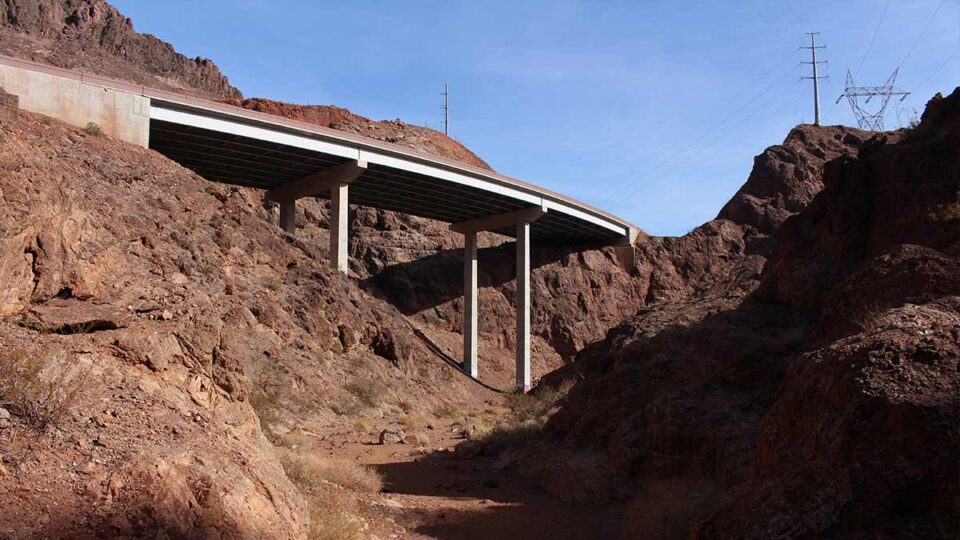
Goldstrike Canyon sits near Boulder City, a community whose history is closely connected to the construction of Hoover Dam. Today, the highway crosses high above the wash, but the pieces scattered below give the canyon another layer of history.

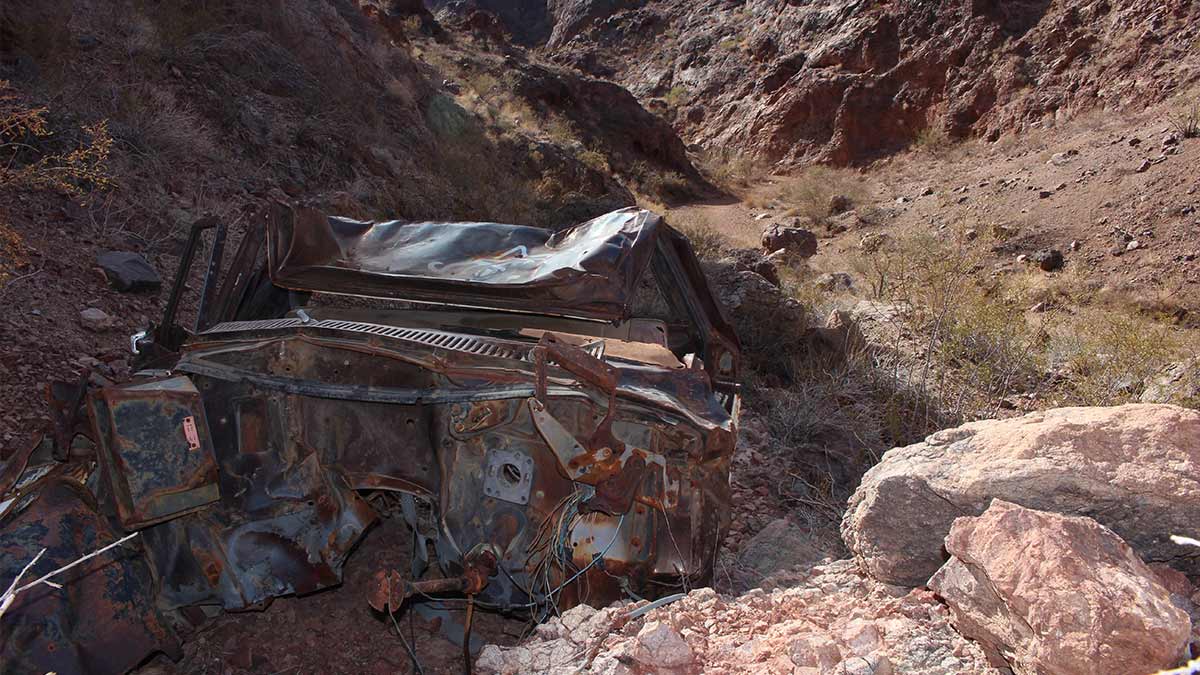
Farther down, even more twisted metal appeared between the rocks.
It made us wonder how some of these heavy pieces ended up so deep in the canyon in the first place. Goldstrike has a lot going on visually already, but those old remnants make parts of the hike feel almost like an accidental outdoor museum.
The Official Rules vs. the Trail Culture
This is where Gold Strike Hot Springs gets interesting.
Officially, the National Park Service treats Goldstrike Canyon as an unmaintained backcountry route. The ropes you encounter are not installed, maintained, or inspected by the Park Service. The spring water is not regularly tested. Visitors are also asked not to build or alter pools with sandbags, rocks, or other materials.
But when you actually hike the canyon, you see another side of the place too.
There is an informal trail culture here that has clearly developed over years of people coming back. Ropes hang from the difficult drops. Sandbags have been used around some of the spring pools. Hikers help one another through awkward sections. On a previous trip, we even saw an informal water station with bottles and a trash bin that somebody had carried into the canyon.
None of that means those things are officially maintained or guaranteed to be safe.
A rope might have been replaced recently, or it might have spent months baking in the desert sun. A bottle of water left beside the trail might have been placed there that morning, or it could have been sitting there for days. Anything left by another visitor has to be treated as exactly that: something left by another visitor.
The route is part of Lake Mead National Recreation Area. If you want to explore more of the landscape surrounding Gold Strike, check out our guide to Lake Mead’s hidden shores and trails.

For water, we carried our own. The National Park Service recommends at least two liters per person for the round trip, and there are no drinking-water services once you are down in the canyon.
The people who hike Gold Strike have helped shape the personality of the route, but that is different from having professionally maintained infrastructure.
That distinction becomes even more important once the ropes start.
The Rope-Assisted Trail Through Goldstrike Canyon
As we moved deeper into Goldstrike Canyon, the rock walls grew taller and the terrain became increasingly uneven. The air felt cooler farther below the highway, while each bend seemed to reveal another chute, boulder, or narrow passage.
Before long, we reached the first major dry fall.
There was already a rope hanging there, just like there had been on previous visits.


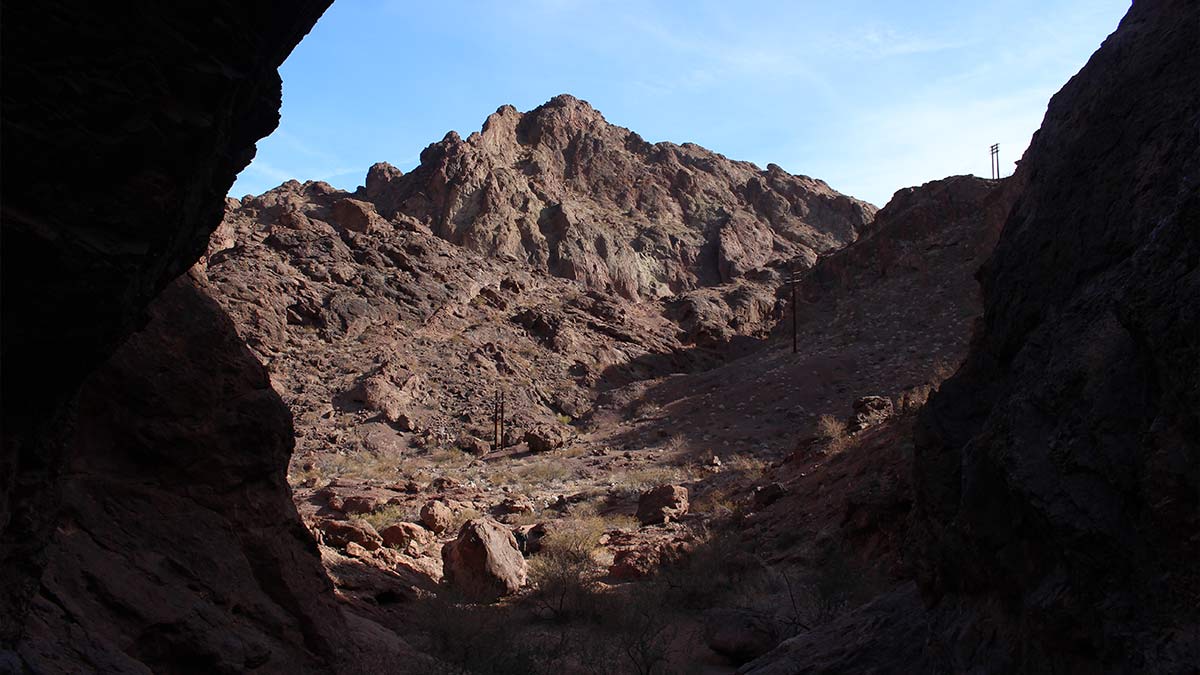
The ropes absolutely make some of these drops easier. There are also carved footholds and natural handholds throughout the rock that help with the descent.
At the same time, these are visitor-installed ropes. There is no inspection tag hanging from them and nobody from the Park Service checking their condition every morning.
We used them, but we also paid attention to the rock around us and tried not to put ourselves in a position where one rope was the only thing keeping us safe.
The canyon eventually opened into a small valley, giving us a short break from the tighter walls. Power lines crossed above us, one of the few reminders that major roads and infrastructure were actually nearby.
The Rocks, Chutes, and Narrow Passages


Water marks along the canyon walls showed just how much force can move through this place during storms.
Flash flooding is a serious hazard in a narrow wash like Goldstrike Canyon. This is not somewhere we would want to be if thunderstorms were threatening the area.
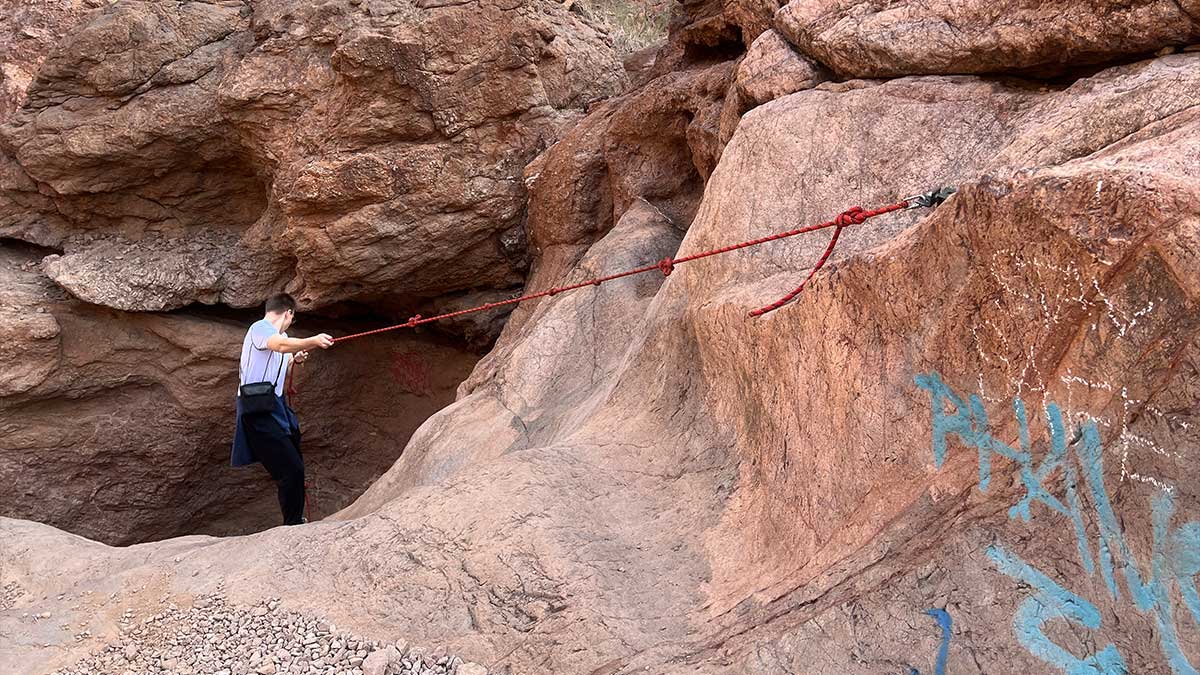
Farther down, another section looked almost like a natural rock slide.
With the rope there, the descent felt manageable, and we slowly worked our way down. It was fun, but every time we dropped farther into the canyon, there was also the reminder that we would have to climb the same obstacle on the way back.
The Boulder Scramble Toward the Springs
The route kept getting steeper and narrower.
By the time we reached another major dry fall, we had to slow down and really think about where we were placing our hands and feet. This is where Gold Strike separates itself from a normal maintained hiking trail.


Eventually, we reached the massive boulder section.
We scrambled between huge rocks as the canyon dropped toward the first signs of water. After so much dry gravel and stone, seeing a small stream running across the canyon floor made it obvious we were getting close to Gold Strike Hot Springs.
Water levels can change quite a bit depending on conditions, so the spring area will not necessarily look exactly the same on every visit.
Hot Spring Water Safety
The spring water is not regularly tested, and the pools are not designated swimming areas. The National Park Service reports that pooled water here has previously contained fecal coliform, E. coli, enterococci, and amoebas such as Naegleria.
Never drink the spring water. Entering the pools is a personal decision, and visitors should understand the health warning before getting in.
The Park Service also asks visitors not to add sandbags, rocks, or other objects that block or substantially alter the spring’s natural flow because additional pooling can increase health risks.
The Final Stretch to the Springs
After working through several more rocky sections, we started hearing water moving through the canyon.
That sound is one of the best parts of the hike. After miles of rock, sand, ropes, and boulders, the canyon suddenly starts feeling completely different.


The first pool we reached was tucked beneath a cluster of boulders in a small cave-like opening, sometimes referred to as the Cave of Wonders.
It was small and shallow, but the setting was awesome.
We stopped there for a little while before continuing toward the larger pools farther down the canyon.
A short distance later, we reached another open spring between the canyon walls. The water level was fairly high during our visit, though that can change from trip to trip.
Reaching actual water after the long descent makes Gold Strike Hot Springs feel like a real destination rather than just the turnaround point of a hike.
The Hidden Gem at the Bottom of the Canyon

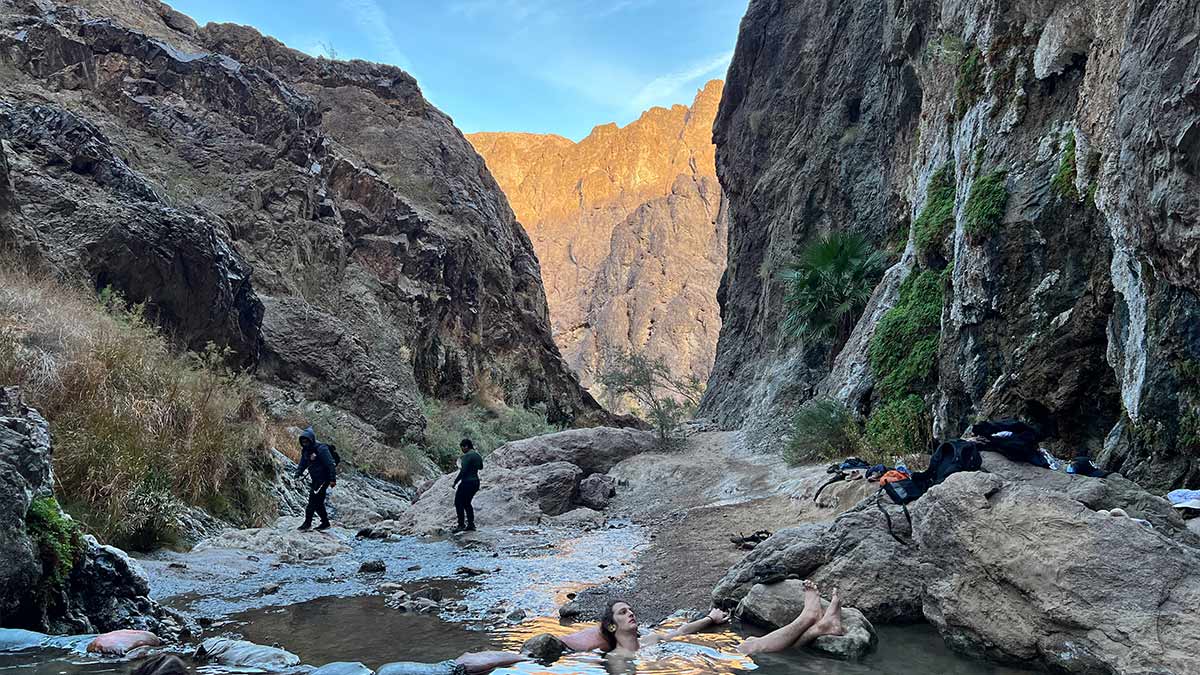
Beyond the first pools, the canyon opened around a series of small waterfalls, wet rock, and pockets of green vegetation.
The setting down here really is incredible.
It feels completely different from the dry desert canyon you spend most of the hike walking through. Some areas of the water looked crystal clear, while others became cloudy almost immediately when the mud and sediment at the bottom were stirred up.
The Park Service water warning is worth knowing, but visually, it is easy to understand why so many people make the trip down here.
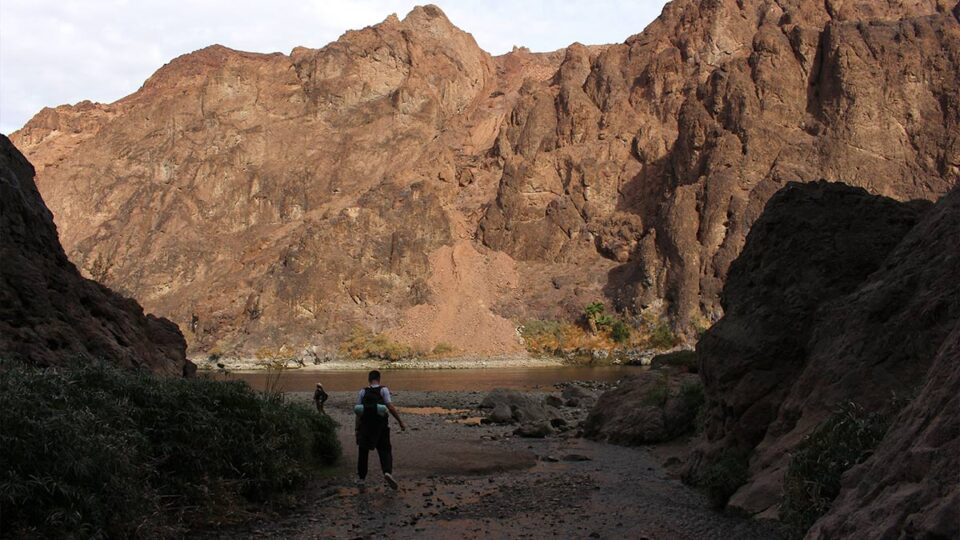
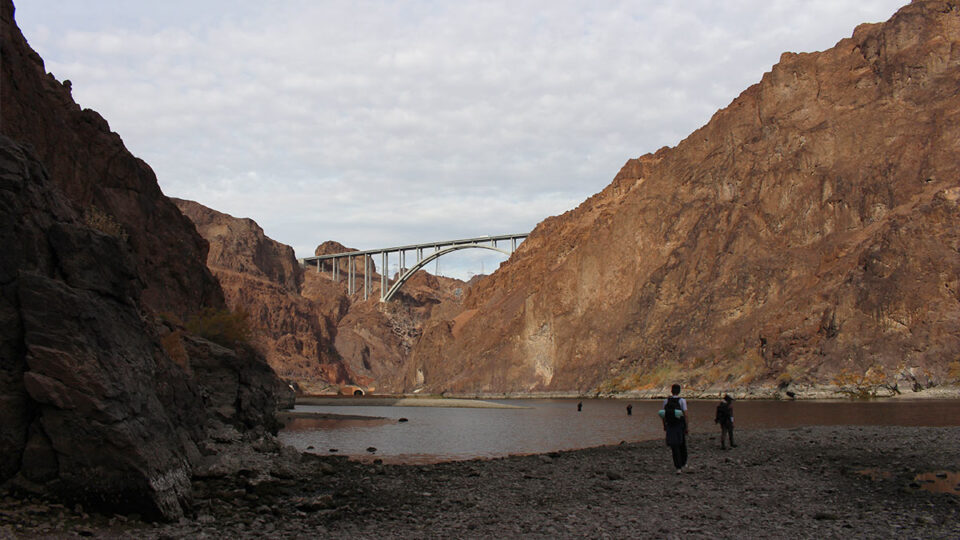
We walked about a quarter mile farther toward the Colorado River and stopped to take in the view.
The cliffs, desert landscape, and river below made the whole area look almost unreal.
For another way to reach the water around Lake Mead, our trip to Kingman Wash swaps the canyon scrambling for a rough dirt-road drive down to a secluded shoreline near Hoover Dam.
Soaking at Gold Strike Hot Springs
After checking out the Colorado River, we headed back toward the main spring.
And yes, we got in.
Like plenty of people who make the hike to Gold Strike Hot Springs, part of the experience for us was spending time in the water. We knew the pools were not regularly tested and understood the National Park Service warning, but we made the decision to soak anyway.
Around parts of the spring, we could see sandbags that previous visitors had placed to shape some of the pools.

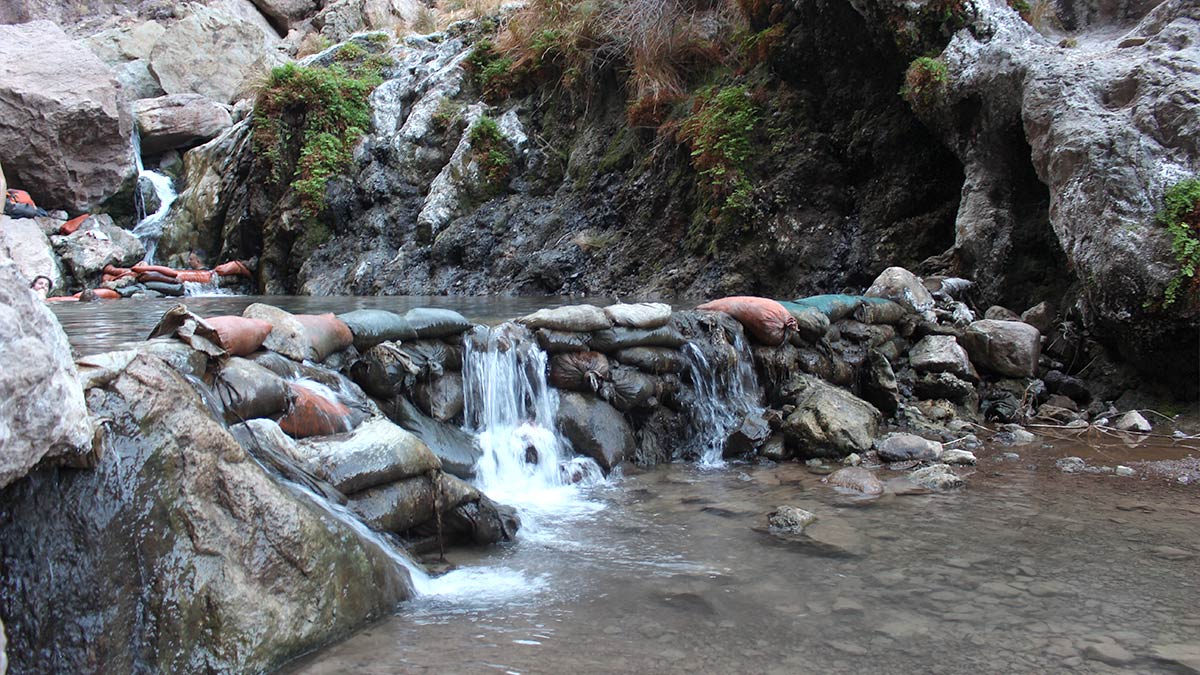
We did not bring sandbags or start redirecting the spring. What was there was already part of the scene when we arrived.
The connected pools created several different places to sit, including a smaller bathtub-sized area near warmer flowing water. We settled in and enjoyed the canyon around us.
Looking up, we could also see the remains of an old ladder against the rock wall. Between the ladder, visitor-built features, natural waterfalls, and canyon walls, Gold Strike has this strange mix of wild desert and decades of human presence.

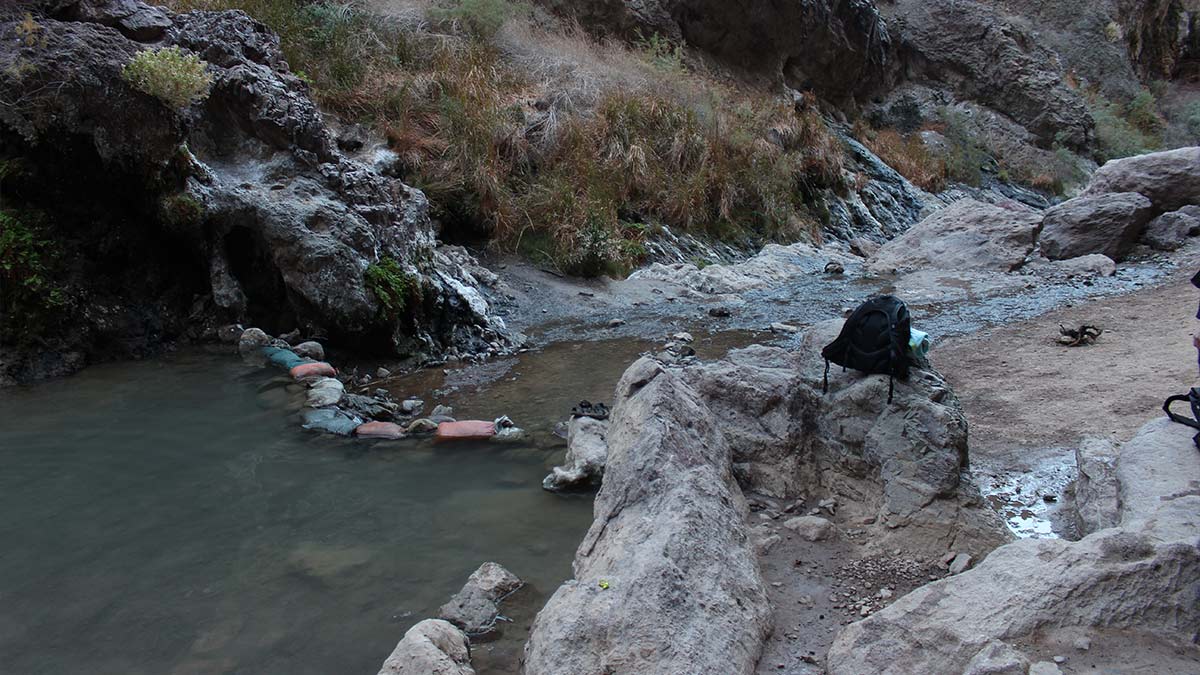
We ended up spending a couple of hours around the springs.
We played with the soft mud and loose pebbles around us, making little shelves in the mud and decorating them with rocks while we hung out. We were not building dams or trying to redirect the spring. We were just messing around, relaxing, and having a great time down there.
That is one of the memories I did not want to erase from the story just because the official guidance is more cautious today.
There is a difference between telling people to go alter the spring and honestly describing what happened during our visit.
For us, sitting in the water, playing around with the mud, talking, and enjoying the canyon was a huge part of the day.
It was one of those places where a couple of hours can disappear surprisingly quickly.
The Long, Rewarding Ascent Back
Eventually, we had to leave the water and start climbing.
This is where Gold Strike Hot Springs makes you pay for everything you descended earlier.
Almost every chute, dry fall, rope section, and boulder scramble has to be climbed again on the way out. With about 1,200 feet of elevation change across the round trip, the return feels noticeably harder than the hike in.
“We couldn’t help but notice the group headed down as we were making our way out. Don’t forget, the hike back is just as tough, and the sun doesn’t wait for anyone!”
Along the way, we met Gerry and Becki from Montana, who were also making their way back through the canyon.
They were having a tough time with a few of the rockier sections, so we slowed down and helped where we could.
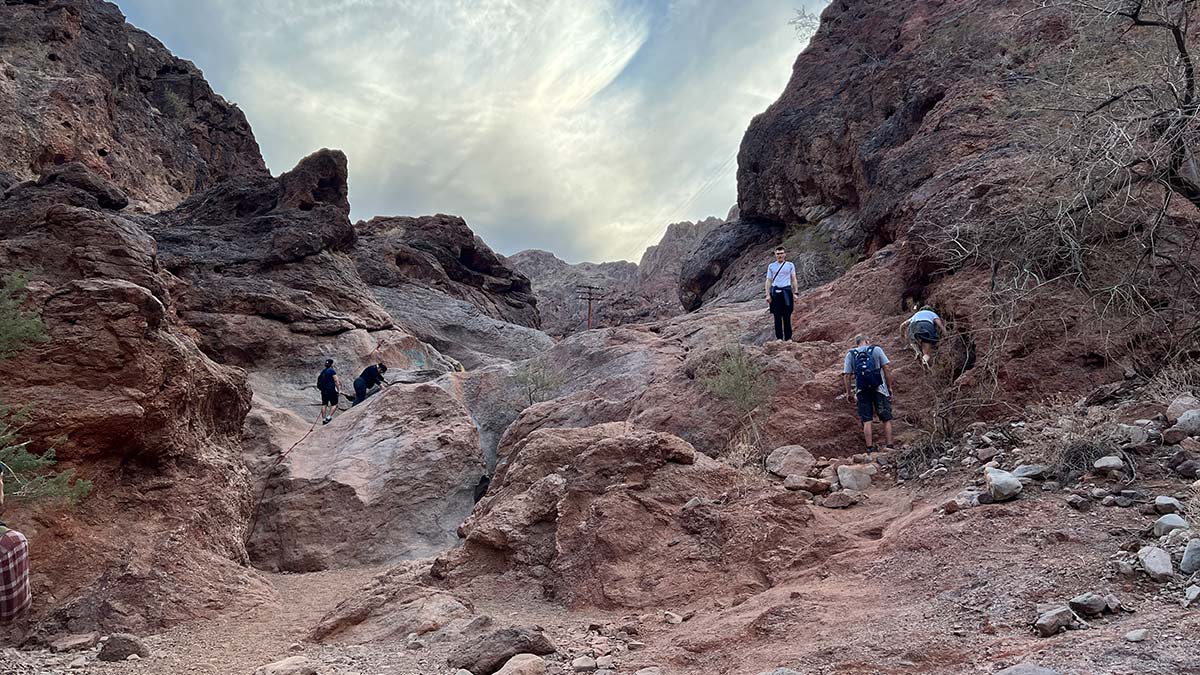
That kind of interaction is another part of the trail culture here.
People talk to each other. They give each other tips. They wait at harder obstacles. Sometimes they lend a hand.
On an unmaintained route where everybody eventually has to climb back through the same difficult sections, a little cooperation goes a long way.
Together, we worked through some of the steepest parts of the canyon before eventually reaching the easier terrain near the top.
Once we made it back, we stopped to catch our breath before returning to the car.
We were tired, but it had been exactly the kind of day we came for.
Tips Before You Go
- Check closures before leaving: The Gold Strike Hot Springs hiking route is closed annually from May 15 through September 30. Temporary closures may also occur outside those dates when the Willow Beach forecast reaches 95°F or higher. Confirm the current status through the National Park Service alerts and conditions page.
- Carry your own water: Bring at least two liters of drinking water per person, and more when conditions require it. Do not plan your hike around water bottles or informal caches that somebody else may have left behind.
- Prepare for a very strenuous route: The 5.3-mile round trip includes seven dry falls, loose rock, steep scrambling, and about 1,200 feet of elevation change. Give yourself plenty of daylight for the hike back.
- Treat the ropes as visitor-installed equipment: People use the ropes, and they can make several drops easier, but they are not supplied or inspected by the National Park Service. Check what you are grabbing and make sure you are comfortable with the climb itself.
- Know the water warning: People soak at Gold Strike Hot Springs, and we did too. The pools are not regularly tested, however, and NPS has reported bacteria and amoebas in pooled water. Never drink it and make your own informed decision before getting in.
- Respect what is already here: Enjoy the canyon, but do not haul in new sandbags, build dams, redirect the spring, leave trash, or abandon supplies. Pack out what you bring with you.
For another rugged Southern Nevada canyon experience, check out the Sloan Canyon Petroglyph Trail. If you want dramatic Nevada rock formations without Gold Strike’s technical dry falls, our Valley of Fire adventure covers scenic drives, desert trails, and some of the state’s most recognizable sandstone landscapes.
Gold Strike Hot Springs remains one of the most memorable outdoor adventures close to Las Vegas.
The route is difficult. The ropes are unofficial. The water comes with legitimate warnings. The pools have been shaped in part by generations of visitors. None of that takes away from how incredible the canyon is.
If anything, that complicated relationship is part of what makes Gold Strike different.
It is not a polished attraction. It is a wild canyon with its own trail culture, incredible scenery, and a community of people who keep coming back to experience it.
For us, the dry falls, the Colorado River, the ropes, the mud, the springs, and even the exhausting climb back were all part of the same adventure.
You can find more places like it in our Everyday.Vegas day trips and road-trip adventures.
How Do Hot Springs Form?
Hot springs are produced by geothermal heat from within the Earth. Groundwater moves through fractures in the rock, warms as it circulates at depth, and returns to the surface through faults and cracks. Water temperature and flow can vary, so visitors should not assume every pool will remain within a fixed temperature range.
Frequently Asked Questions
Is the Gold Strike Hot Springs Trail open year-round?
No. Goldstrike Canyon is closed annually from May 15 through September 30 because of extreme heat. Temporary closures may also occur outside those dates when the forecast at Willow Beach reaches 95°F or higher. The hot springs may remain accessible by water on Lake Mohave, but visitors should check current National Park Service alerts before traveling.
How difficult is the Goldstrike Canyon Trail?
The National Park Service classifies the 5.3-mile round-trip route as very strenuous and a Class 2 canyoneering route. It includes about 1,200 feet of elevation change, seven dry falls, steep scrambling, loose rock, and sections where hikers must use their hands and feet. Plan approximately 4 to 8 hours for the complete round trip.
Are the ropes on the trail maintained?
No. Ropes found along the route were installed by visitors and are not supplied, maintained, or inspected by the National Park Service. They may be worn, incorrectly tied, or unsafe. Hikers should not descend a dry fall unless they are confident they can climb back up without relying on a rope.
Is it safe to soak in Gold Strike Hot Springs?
The springs are not designated swimming areas, and the water is not regularly tested. The National Park Service reports that pooled water has previously contained fecal bacteria and amoebas such as Naegleria. Never drink the water, do not alter the flow with sandbags or other objects, and use your own judgment before entering.
What facilities and fees should hikers expect?
There are toilets at the parking area, but no toilets or drinking-water services at the springs. Carry at least two liters of drinking water per person and pack out all trash and human waste. The trail is within the Lake Mead National Recreation Area fee zone, so keep a park pass or proof of admission with the vehicle. No trail reservation is required.
Address:
Gold Strike Hot Springs Trail
Boulder City, NV, 89005
Hours:
Lake Mead National Recreation Area: Open 24 hoursGoldstrike Canyon hiking route: Closed annually May 15 through September 30. Temporary heat closures may occur outside those dates. Check current National Park Service alerts before visiting.
Phone:
(702) 293-8990
Reservations:
No







Comments are closed.