
(08/07/2026 UPDATE – CHINATOWN LOCATION CLOSED)
Le Café Central announced the permanent closure of its Chinatown location in May 2026 after approximately one year on Spring Mountain Road.
This closure applied only to the Chinatown café featured in the original article below. The Le Café du Vegas family continued operating Le Café du Val in Henderson and Le Café du Sud in Southern Highlands.
The following article has been preserved as a record of our original visit. The menu, hours, staff, ownership involvement, dishes, and other details reflect Le Café Central at the time of publication and may no longer apply.
Looking for another neighborhood café? Explore more Las Vegas cafes and sweets.
Some mornings in Chinatown moved fast—coffee in one hand, traffic on Spring Mountain, and a mental checklist we were already behind on.
Le Café Central was the kind of place that quietly interrupted that pace.
Not with gimmicks. It did it with a glowing pastry case, a dining room that felt slightly dressed up, and a menu that encouraged a dangerous thought: what if we actually sat down for this?
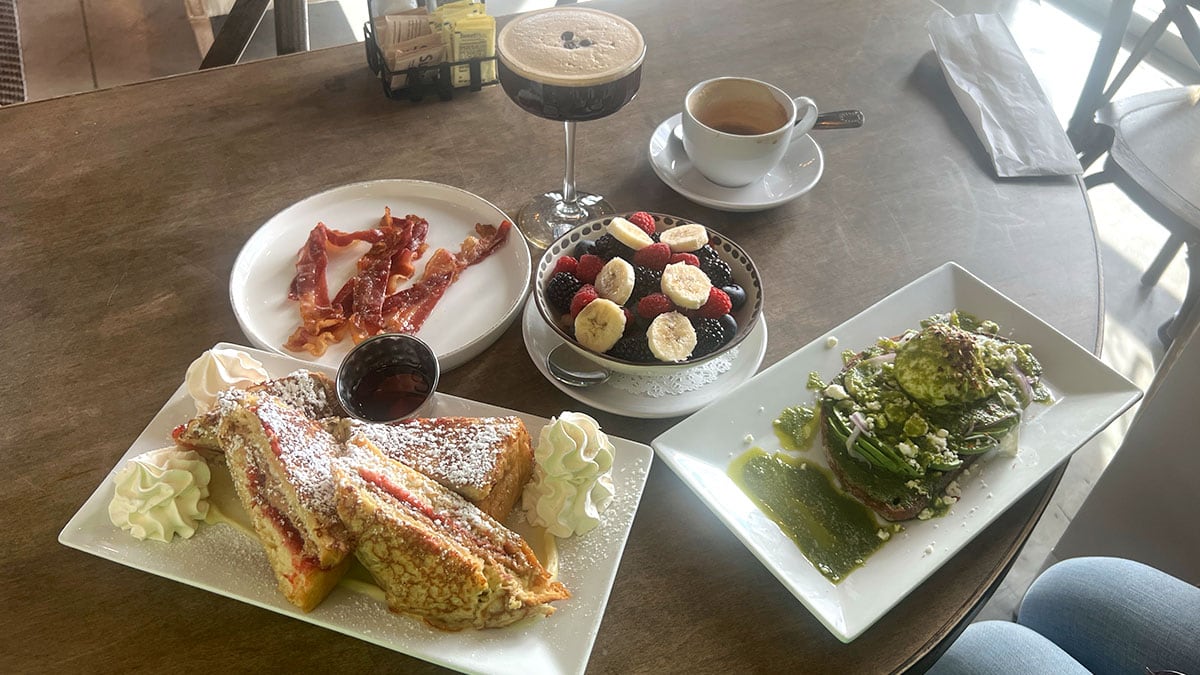
Once we committed, we did it properly: PB&J French toast, pesto salmon, an assorted fruit bowl, a side of bacon, and a latte—the full “sweet chaos + savory balance” lineup.

A Short History of Le Café du Vegas
Le Café Central was the third Las Vegas Valley café in the Le Café du Vegas family, joining Le Café du Val in Henderson and Le Café du Sud in Southern Highlands. The naming convention followed each neighborhood—simple, geographic, and intentional.
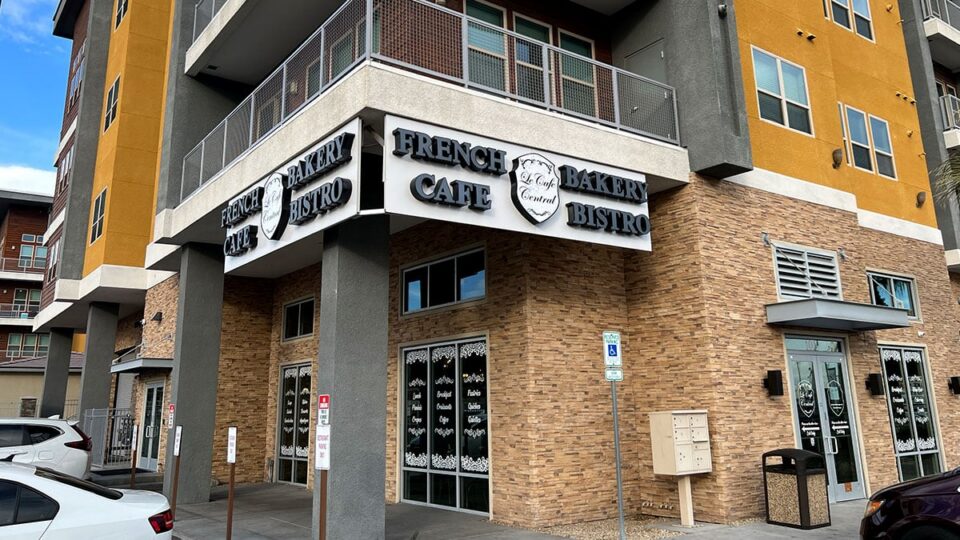
It officially opened in Chinatown in April 2025 at 3616 Spring Mountain Road, Suite 101—next door to The Taco Stand, right in the corridor locals already treated as one of the city’s default destinations for finding something good to eat.
The owners traced their Las Vegas café story back to Le Café du Lac at Lake Las Vegas, which opened in 2017 and closed in 2022, before the concept expanded into neighborhood cafés elsewhere in the valley.
The idea behind the evolution was clear: less Strip spectacle, more everyday habit.
Who Was Behind Le Café Central
Le Café Central was part of the café group owned by chef David Gazzano, originally from Nice in the French Riviera, and Carmen Barbur, who was born in Romania and brought significant front-of-house hospitality experience to the operation.
For the Chinatown location specifically, they also brought in executive chef Claude Escamilla as a partner and director of operations. His background included extensive pastry experience and leadership roles at major Las Vegas Strip resorts.
The common thread behind the concept was refreshingly straightforward. Their interpretation of French café culture was less about competing for attention on the Strip and more about creating a neighborhood destination centered on food quality, service, and ambiance.
That was exactly what Le Café Central felt like during our visit: not a temporary trend, but a café designed around becoming part of someone’s routine.
The Vibe: Bright, a Little Fancy, Still Totally Approachable
Le Café Central did not follow the quiet, minimalist “blank white box” café formula.
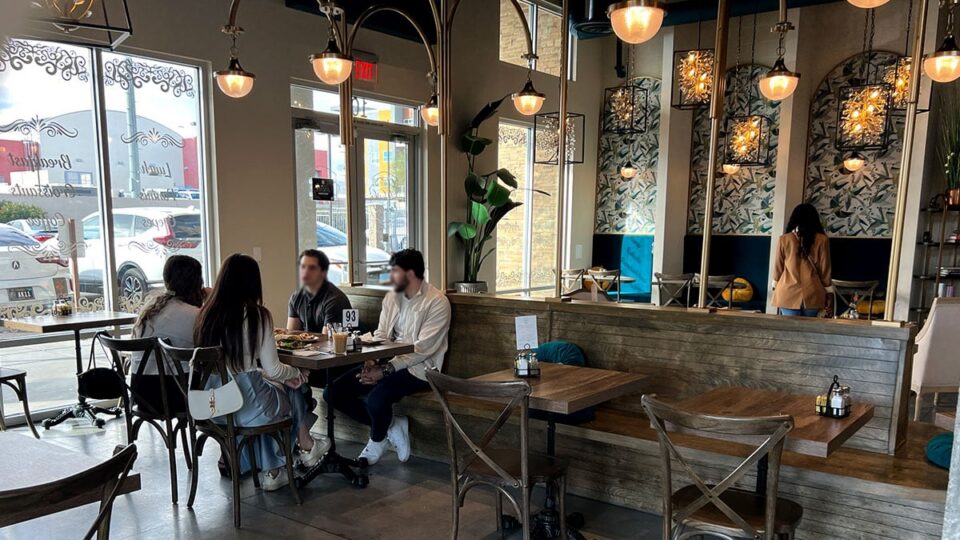
The dining room was boldly designed, with teal walls, chandelier energy, and comfortable seating that made us want to stay for a while instead of grabbing a croissant and eating it in the car.
The best part was its split personality. It worked for a quick coffee and pastry, but it also worked for a full sit-down brunch where someone inevitably asked, “Okay… should we order one more thing?”
It was a room that encouraged guests to linger without making the experience feel overly formal.
Food Choices for the Wild & Fancy
PB&J French Toast: The Headline Act
This was the plate to order when we wanted brunch to feel like a reward.
The concept was nostalgic, but absolutely not shy about crossing into dessert-for-breakfast territory. It was the type of plate we photographed before touching because we knew the first bite would immediately ruin the “before” picture.
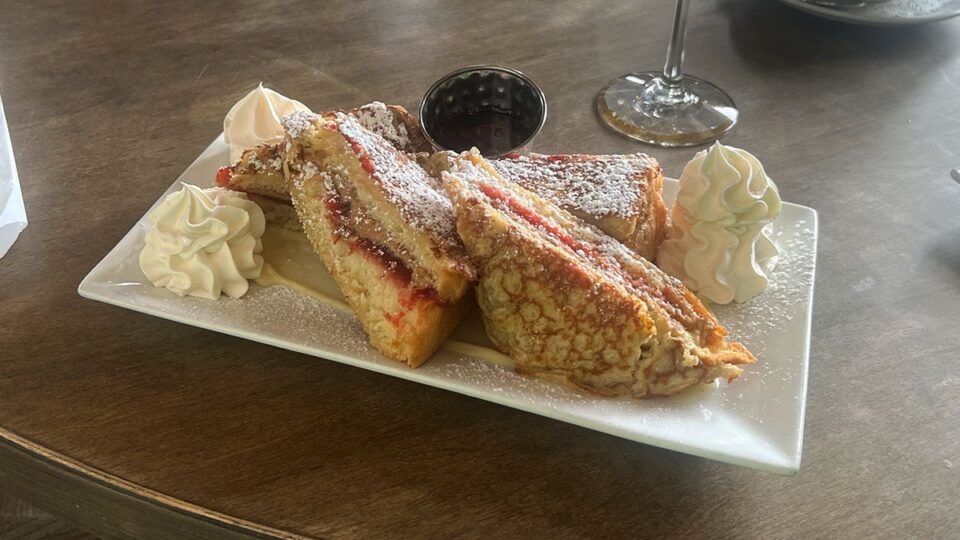
For turning an ordinary morning into something more memorable, this was the standout.
Pesto Salmon: The “We’re Adults” Counterbalance
The pesto salmon was what kept the table grounded.
Le Café Central was not limited to pastries and sweets. The savory side of the menu helped make the café feel like somewhere guests could return regularly rather than saving it only for an occasional indulgence.
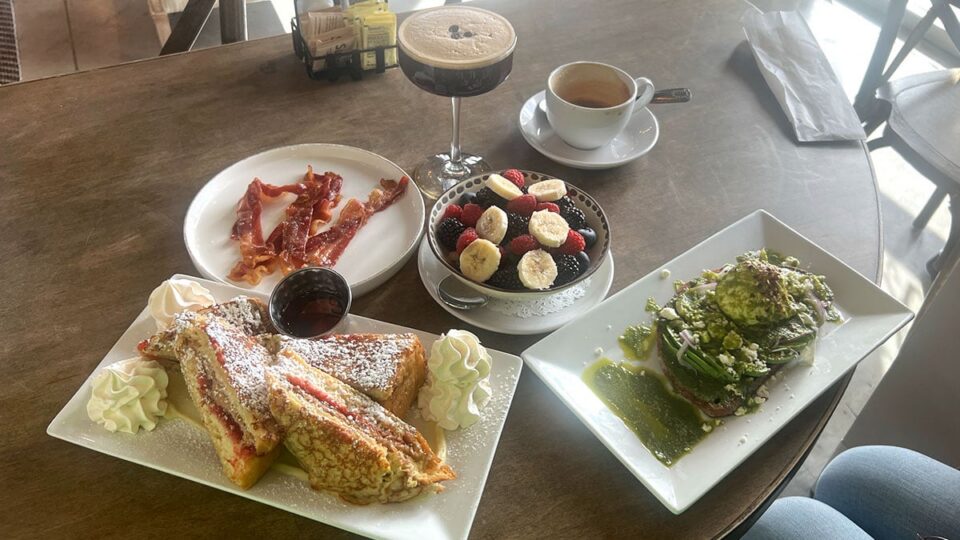
Pesto salmon brought balance and substance to the meal and provided that reassuring “okay, we’re still being reasonable” energy, even while the PB&J French toast argued otherwise.
Fruit Bowl + Bacon: The Stabilizers
The fruit worked as a reset button. The bacon provided the salty anchor.
Together, they did exactly what we wanted during a brunch where we had clearly ordered a little of everything: they kept the sweeter dishes from tipping the meal into complete sugar overload.
They were not filler. They were strategy.
Latte: The Proof-Point
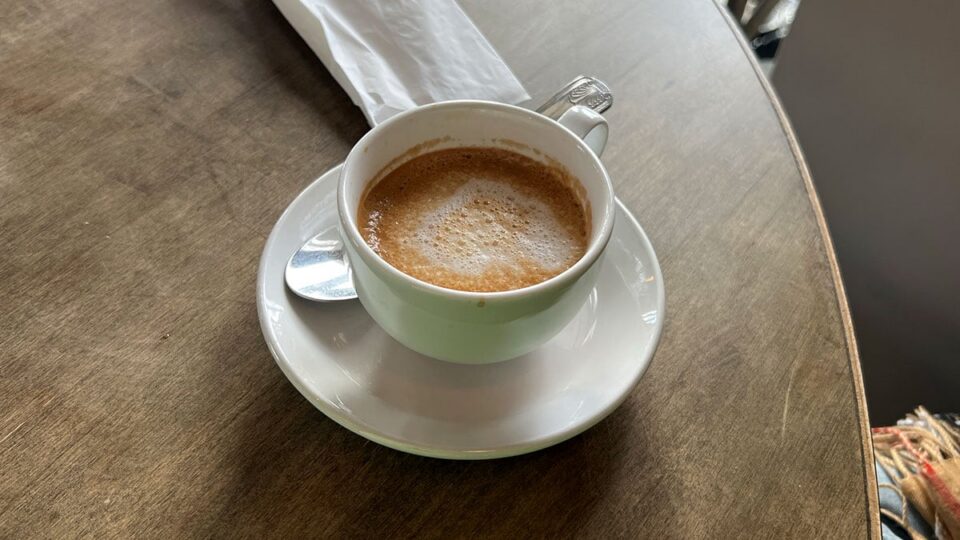
A French-inspired neighborhood café needed good coffee, and the latte was one of the simplest ways to judge whether the concept worked.
Le Café Central was designed for lingering over espresso drinks rather than rushing everyone out the door. During our visit, the coffee supported the entire idea behind the café: stay awhile.
Remembering Le Café Central in Chinatown
Le Café Central made sense in Chinatown because it never seemed interested in trying to out-weird or out-trend the neighborhood.
Instead, it brought something Chinatown already did particularly well—serious food, strong identity, and worth-the-drive energy—through a French café lens.
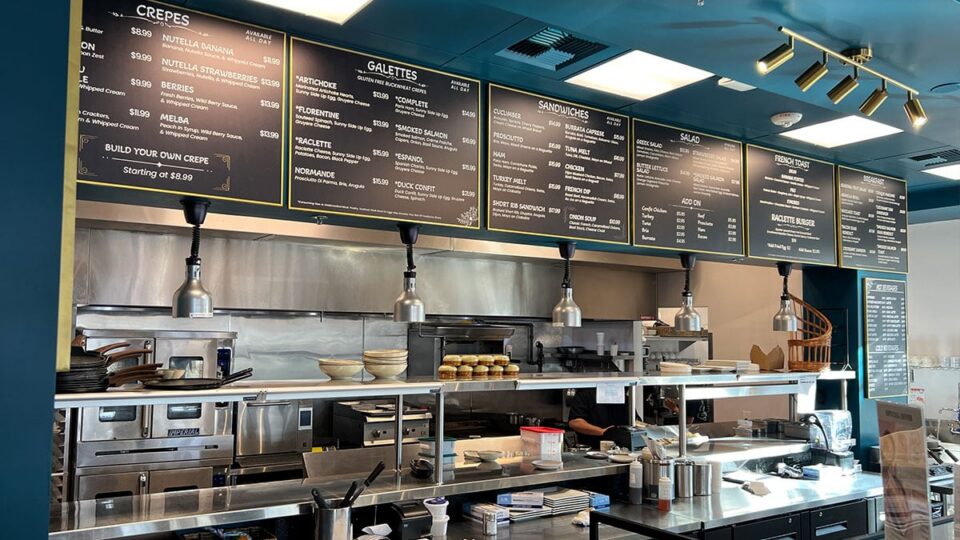
Viennoiseries, macarons, sweet and savory crêpes and galettes, coffee, and a breakfast-and-lunch menu gave groups with different cravings plenty of ways to share a table.
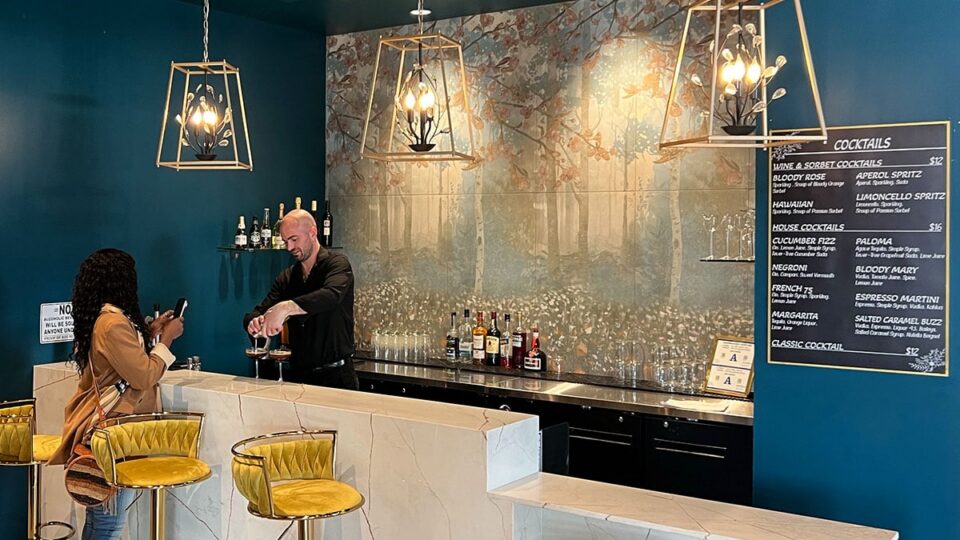
It worked as a “bring your friend who loves pastries” café and as an “I need something substantial before the rest of my day gets out of hand” café.
That combination was what made Le Café Central feel suited to the neighborhood during its time on Spring Mountain Road.
Although the Chinatown location has permanently closed, this article remains as a record of the colorful dining room, French-inspired pastries, creative brunch dishes, and neighborhood café experience it once brought to Chinatown.






TALK TO THE AUTHOR
If you’ve spotted something we missed, found a typo, or have any suggestions, we’d love to hear from you!
Enjoy our local stories?
See more Everyday.Vegas on Google.