
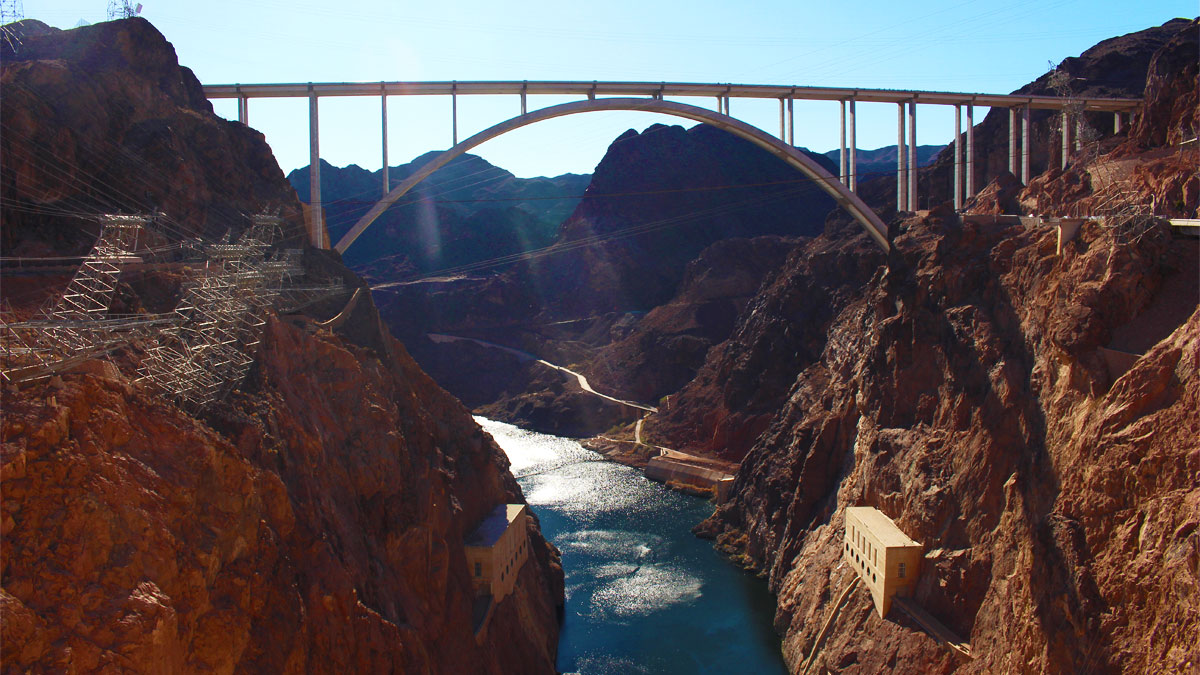
Less than an hour from Las Vegas, Hoover Dam is one of those places that feels familiar until you are standing on top of it. Photos show the scale, but they do not quite prepare you for the drop into Black Canyon, the massive intake towers rising from Lake Mead, or the sheer amount of concrete stretching between Nevada and Arizona.
There is also much more here than a quick photo stop. Hoover Dam combines engineering, Southwestern history, Art Deco design, Colorado River views, underground tours, and easy access to Boulder City and Lake Mead, making it one of the most rewarding day trips from Las Vegas.
You can walk across the top of the dam, look down toward the powerplant, take in the full structure from the Mike O’Callaghan–Pat Tillman Memorial Bridge, or head inside to learn how one of the most ambitious public works projects of the 20th century came together.
And once you begin exploring the surrounding area, the dam becomes the starting point for an even bigger Southern Nevada story.
The Story Behind Hoover Dam
The story of Hoover Dam took shape during the Great Depression, when thousands of workers arrived in Black Canyon for an enormous federal construction project designed to control the Colorado River, store water, and generate hydroelectric power.
Construction began in 1931. Before the dam could rise, crews had to redirect the Colorado River through massive diversion tunnels blasted through the canyon walls. At the same time, roads, rail lines, power infrastructure, and an entire community were being built around the project.
That community became Boulder City, which the federal government developed to house workers, officials, and their families. Today, its historic downtown, museums, restaurants, parks, and old railroad connections make it a natural companion stop to a Hoover Dam visit.

The scale of the work is difficult to imagine. A total of roughly 21,000 men worked on the project over its construction period, and the dam itself rises more than 726 feet above its foundation. Concrete placement was completed in May 1935, President Franklin D. Roosevelt dedicated the project that September, and all major features were completed by March 1936.

human engineering, rising from the rugged desert landscape to harness the power of the Colorado River.
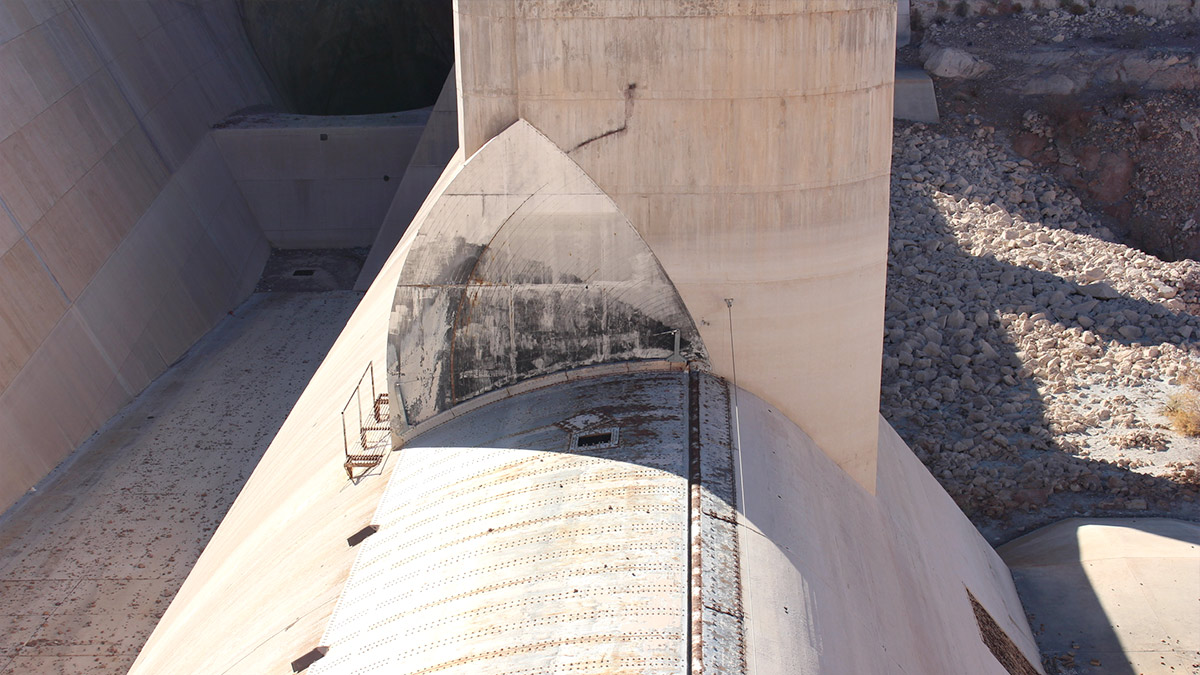
Walking across Hoover Dam today, those construction statistics become much easier to appreciate. The canyon walls, powerplant, intake towers, spillways, tunnels, and enormous concrete arch all fit together as parts of a project built on a scale that still feels extraordinary nearly a century later.
“The more I learned about the workers, the more the dam felt alive. Every rivet and seam holds stories of grit and sacrifice, turning cold concrete into something deeply human.”
Planning a Visit to Hoover Dam
Hoover Dam works equally well as a dedicated half-day trip or as the centerpiece of a full day around Boulder City and Lake Mead. From Las Vegas, the drive takes you through Henderson and Boulder City before descending toward Black Canyon.
The Bureau of Reclamation currently lists the Hoover Dam grounds as open daily from 5:00 a.m. to 9:00 p.m. The Visitor Center and tours operate from 9:00 a.m. to 5:00 p.m., with Visitor Center doors closing at 4:15 p.m. Because tours can sell out or occasionally be affected by operational conditions, checking the official Hoover Dam visitor information before leaving Las Vegas is the best approach.
There is no official street address for the dam itself. The Bureau of Reclamation recommends entering “Hoover Dam” into your navigation system rather than relying on a numbered street address.
Walking Across Hoover Dam
Your Hoover Dam experience begins long before you step inside the Visitor Center. As the access road descends into Black Canyon, the intake towers and blue water of Lake Mead begin appearing between the mountains.
Once parked, you can walk across the top of the dam between Nevada and Arizona. The view changes constantly: Lake Mead and the intake towers dominate one side, while the Colorado River, powerhouse, and Black Canyon open dramatically below the other.


The Memorial Bridge View
For the wide-angle view most people associate with Hoover Dam, make time for the pedestrian walkway on the Mike O’Callaghan–Pat Tillman Memorial Bridge. From above Black Canyon, the full curve and height of the dam come into view at once.
It is one of the best places to understand the scale of what you just walked across. From the bridge, Hoover Dam suddenly looks much smaller against the canyon—until you notice the cars and people crossing the top and realize just how enormous the structure actually is.
“Standing on that bridge, looking down at Hoover Dam, the contrast between the deep canyon walls and the smooth concrete structure is surreal. It’s the kind of place where you don’t just take photos—you take a moment.”
Inside Hoover Dam: Tours and the Visitor Center
Though I chose to explore the exterior and surrounding area on my visit, Hoover Dam offers several ways to go deeper inside the project.
Guided Dam Tour
The Guided Dam Tour is currently $40 per person, with children age three and under admitted free. This is the most extensive option and includes the Power Plant Tour along with access to historic tunnels and an inspection tunnel inside the dam. Tickets for the Dam Tour are sold in person only and are first come, first served, so arriving early is worthwhile.

Self-Guided Visitor Center
If you would rather explore at your own pace, the self-guided Visitor Center admission is currently $15 per person, with children three and under free.
The experience has also changed significantly since Hoover Dam first opened to visitors. The Bureau of Reclamation reopened a newly renovated Exhibit Center in 2025 with interactive and multisensory displays focused on the workers, construction process, engineering, and purpose of the dam. One centerpiece is a large model showing systems that are normally hidden within the canyon walls.
The Visitor Center observation deck is another reason to go inside, providing elevated views of Hoover Dam, Lake Mead, the Colorado River, and the Memorial Bridge.
What to Know Before You Arrive
- Start early: Morning is generally more comfortable for walking, especially during warmer months, and early arrival gives you a better chance of securing popular tour times.
- Allow time for security: Vehicles entering Hoover Dam are subject to inspection, and visitors entering the Visitor Center must pass through security screening.
- Parking is separate: The Nevada-side parking garage currently charges $10 per vehicle. Some Arizona-side lots are also available, including options for oversized vehicles and trailers.
- Wear comfortable shoes: Even without a guided tour, you may spend considerable time walking between the dam, bridge overlook, monuments, Visitor Center, and parking areas.
- Bring water and sun protection: Much of the experience is outdoors, and Black Canyon can become extremely hot.
- Check current information: Tour availability and operational conditions can change. Review the official Hoover Dam tour page before your visit.
Exploring Beyond Hoover Dam
Hoover Dam can easily be the main destination for the day, but some of my favorite parts of this area begin after leaving the concrete behind.
The surrounding landscape connects Hoover Dam with Lake Mead, the Colorado River, Boulder City, desert trails, hot springs, quiet shoreline areas, and overlooks that reveal just how dramatically water has shaped this part of Southern Nevada.
Lake Mead and the Landscape Behind the Dam
Lake Mead was created by the construction of Hoover Dam, spreading through a maze of desert valleys and canyons upstream from Black Canyon. Today, Lake Mead National Recreation Area offers boating, kayaking, fishing, cycling, hiking, scenic drives, beaches, and desert overlooks.
If you want a quieter view without heading directly onto the water, Hemenway Park in Boulder City offers elevated views toward Lake Mead and is also known for the desert bighorn sheep that frequently visit the grassy park.
For something more rugged, Kingman Wash takes you down toward the lake through a rougher desert landscape, providing another completely different perspective on the Hoover Dam and Lake Mead region.
Historic Railroad Trail
One of the best ways to connect the dam’s engineering story with the surrounding landscape is the Historic Railroad Trail.
The route follows part of the old rail system used to move construction materials toward Hoover Dam. Today, the trail travels through five large railroad tunnels while opening onto expansive views of Lake Mead and Boulder Basin.
The National Park Service lists the route at approximately 3.7 miles one way. Although relatively level, the exposed desert environment can become dangerously hot, and the NPS specifically discourages hiking it during the hottest summer conditions.
Goldstrike Hot Springs

Below Hoover Dam, Goldstrike Hot Springs offers one of the area’s most adventurous hikes, descending through a rugged canyon toward natural hot springs and the Colorado River.
This is not a casual extension of a summer Hoover Dam trip, however. Goldstrike Canyon is seasonally closed from May 15 through September 30 because of extreme heat, with additional temporary closures possible when dangerous temperatures occur outside those dates. The hot springs can remain accessible by water during the seasonal trail closure.
If Goldstrike is part of your plan, always check the current Lake Mead National Recreation Area alerts before heading out.
Sloan Canyon and Southern Nevada’s Older History
Hoover Dam tells a remarkable 20th-century story, but Southern Nevada’s human history stretches back much farther. A visit to Sloan Canyon National Conservation Area shifts the perspective from industrial engineering to a protected desert landscape containing one of the region’s major concentrations of petroglyphs.
“Seeing the petroglyphs at Sloan Canyon after visiting Hoover Dam makes you realize how water has shaped life here for centuries—long before concrete walls held the river in place.”
Hoover Dam’s Continuing Role in the Southwest

It is easy to visit Hoover Dam as a historical attraction and forget that it remains active infrastructure.
The dam continues to help manage Colorado River water while generating hydroelectric power for the Southwest. Its powerplant has historically provided up to 2,074 megawatts of generating capacity, although prolonged drought and lower Lake Mead elevations have reduced actual generation.
That makes standing on the dam especially interesting today. You are not only looking at a monument to 1930s engineering; you are standing above a working piece of infrastructure connected to some of the West’s biggest conversations about water, energy, drought, and the future of the Colorado River.
Making Hoover Dam a Full Boulder City Day
If you have the time, I would not treat Hoover Dam as a drive-in, take-a-photo, drive-out destination.
Spend the morning walking the dam and Memorial Bridge, add a tour or Visitor Center visit, then head back into historic Boulder City for lunch, shops, museums, or a walk through downtown.
You can even keep the Hoover Dam theme going with a stop at Boulder Dam Brewing Co., where the town’s dam-building history is woven into the identity of a relaxed local brewpub.
Or take the opposite approach and spend the rest of the day outside, following Lake Mead toward the shoreline, Hemenway Park, the Historic Railroad Trail, or one of the area’s scenic drives.
That is what makes Hoover Dam such a strong day trip from Las Vegas. The dam itself is remarkable, but it also connects you to Boulder City’s history, Lake Mead’s changing landscape, the Colorado River, and a network of places that tell different chapters of the same Southern Nevada story.
Standing at the edge of Black Canyon, with Lake Mead behind you and the Colorado River continuing downstream below, Hoover Dam feels less like a single attraction and more like the center of a much larger landscape—one shaped by geology, water, engineering, ambition, and nearly a century of change.

Standing at its edge, with Lake Mead stretching behind and the Colorado River winding below, you can’t help but feel the weight of its history and the power of its presence. Whether you visit for the views, the history, or simply to experience its scale, Hoover Dam is a place where the past, present, and future all converge.
Frequently Asked Questions
Is Hoover Dam worth a day trip from Las Vegas?
Yes. A Hoover Dam day trip from Las Vegas combines history, engineering, Colorado River scenery, Lake Mead views, and access to the dam’s Visitor Center and guided tours. Hoover Dam is about 30 miles southeast of Las Vegas, making it an easy destination to combine with Boulder City or Lake Mead.
How much time should you plan for a Hoover Dam day trip?
Plan at least a few hours if you want to walk across Hoover Dam, visit the Memorial Bridge overlook, explore the Visitor Center, and take photos. Allow more time if you plan to take a guided tour or combine your visit with nearby Boulder City, Lake Mead, or the Historic Railroad Trail.
Can you visit Hoover Dam without taking a tour?
Yes. Visitors can explore the outdoor areas of Hoover Dam and walk across the top without taking a guided tour. The Visitor Center and guided Power Plant and Dam tours offer additional access and information for those who want a deeper look at the dam’s construction, history, and operating systems.
What else can you do near Hoover Dam?
A Hoover Dam visit can easily be combined with Lake Mead, historic Boulder City, or the Historic Railroad Trail. The railroad trail follows part of the route once used during Hoover Dam construction and passes through historic tunnels while overlooking Lake Mead.
Can you hike near Hoover Dam during the summer?
Some nearby trails remain accessible, but summer heat requires extra caution. The National Park Service closes several strenuous Lake Mead trails annually from May 15 through September 30, including the Goldstrike Canyon route. The Historic Railroad Trail remains open, but visitors should still consider extreme temperatures when planning outdoor activities.
Hours:
Monday - Friday: 5 AM - 9 PM
Saturday: 5 AM - 9 PM
Sunday: 5 AM - 9 PM
Phone:
(702) 494-2517
Reservations:
No
Admission:
Free







TALK TO THE AUTHOR
If you’ve spotted something we missed, found a typo, or have any suggestions, we’d love to hear from you!
Enjoy our local stories?
See more Everyday.Vegas on Google.