
Table of Contents[Hide]
We left Las Vegas at 6:30 in the morning, the city still quiet and dim behind us. The desert stretched out in that familiar way for the first hour, flat and muted, before slowly giving way to rising cliffs and deeper colors as we crossed into Utah. Because of the time change, our three hour drive landed us at the gates of Zion National Park around 10:30 a.m. Utah time.
“Three hours from Vegas and it already felt like we were on another planet. The shift from open desert to towering red rock walls happened so fast it almost didn’t feel real.”
There is something surreal about how quickly Zion National Park transforms the landscape. One minute you are cruising through open desert highways. The next, massive sandstone walls rise around you like ancient fortresses, glowing under a sky that somehow looks bigger than usual.
Entering the Park and First Impressions
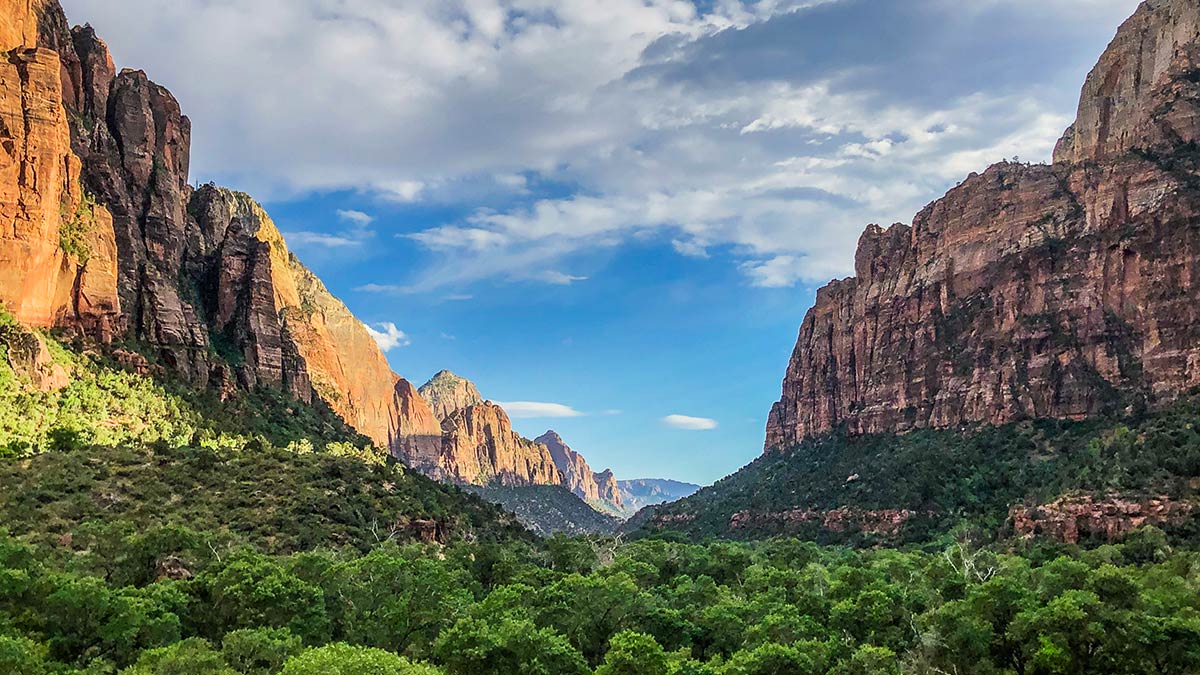
Entry into Zion National Park is $35 per vehicle for a seven day pass. After paying at the entrance station, we drove in and immediately felt the scale of the canyon. Towering cliffs of Navajo Sandstone glowed red, orange, and cream under a clear blue sky.
The rock faces did not just look tall. They looked ancient. Layered. Weathered. You can see the lines of time etched into them.
“Pictures don’t do it justice. The cliffs just keep going and going, and no matter how high you look, they stretch even further.”
No Shuttle, No Scenic Drive Access
The shuttle system was not running when we went. Zion National Park typically operates its mandatory shuttle system from early spring through late fall, often March through November, when visitation is at its highest. During that period, private vehicles are not allowed on Zion Canyon Scenic Drive and visitors must ride the park shuttle to access trailheads like Emerald Pools, Angels Landing, and The Narrows.
In the winter months, usually December through February, the shuttle does not operate and private vehicles are allowed to drive the Scenic Drive. However, access can still be temporarily restricted due to crowd control, weather, or traffic flow.
That morning, they were not allowing vehicles up the Scenic Drive yet either, so we parked near Canyon Junction along the side of the road and started walking instead.
It added mileage to the day, but it also made the experience feel earned. There is something different about covering ground on foot instead of being dropped off.
Zion National Park Hikes
Zion National Park offers a range of hikes for every level, from easy riverside walks to bucket-list climbs with serious elevation gain. Whether you want something casual or challenging, there is no shortage of unforgettable trails.
- Emerald Pools (Lower, Middle, Upper) – A tiered trail system ranging from easy to moderate, featuring waterfalls, shaded overhangs, and canyon views.
- The Narrows – A unique hike directly through the Virgin River, where you choose how far to go before turning back.
- Angels Landing – A strenuous 5.4-mile round-trip hike with 1,488 feet of elevation gain and a permit-required chained ridge section.
- Riverside Walk – A paved, mostly flat 2-mile round-trip trail leading to the entrance of The Narrows.
- Observation Point – A longer, challenging hike that rewards you with one of the highest viewpoints overlooking Zion Canyon.
- Canyon Overlook Trail – A short but scenic hike near the east entrance offering panoramic canyon views.
Walking the Zion National Park Canyon Scenic Drive
From Canyon Junction to the Emerald Pools trailhead is about 2.8 miles. We started walking around 10:30 and reached the trail entrance at about 12:30. The canyon walls surrounded us the entire way.
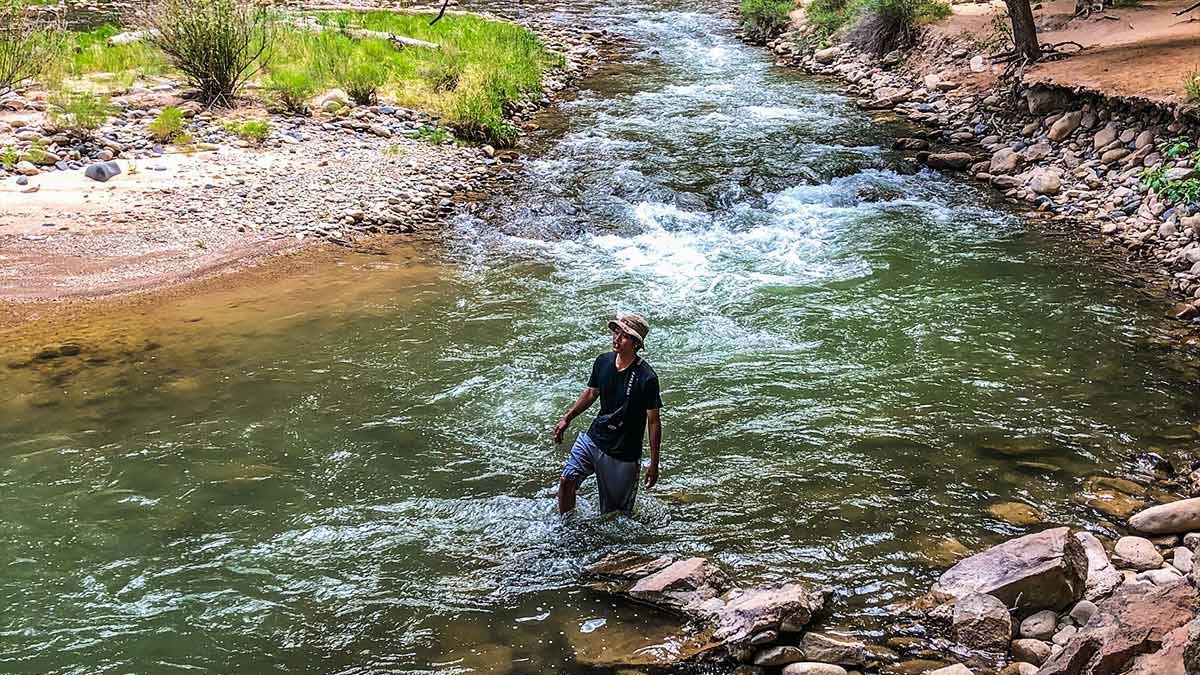
The Virgin River carved its way alongside the road, green and steady, cutting through rock that has been forming and eroding for nearly 200 million years. Zion’s canyon was shaped primarily by the North Fork of the Virgin River, which slowly sliced through layers of Navajo Sandstone.
The towering cliffs you see today are the result of uplift, erosion, and time on a massive geological scale. What looks permanent is still slowly changing.
“The walk felt long, especially knowing we still had the hike ahead, but every single turn gave us another view that made us stop and stare.”
Emerald Pools: Lower Trail
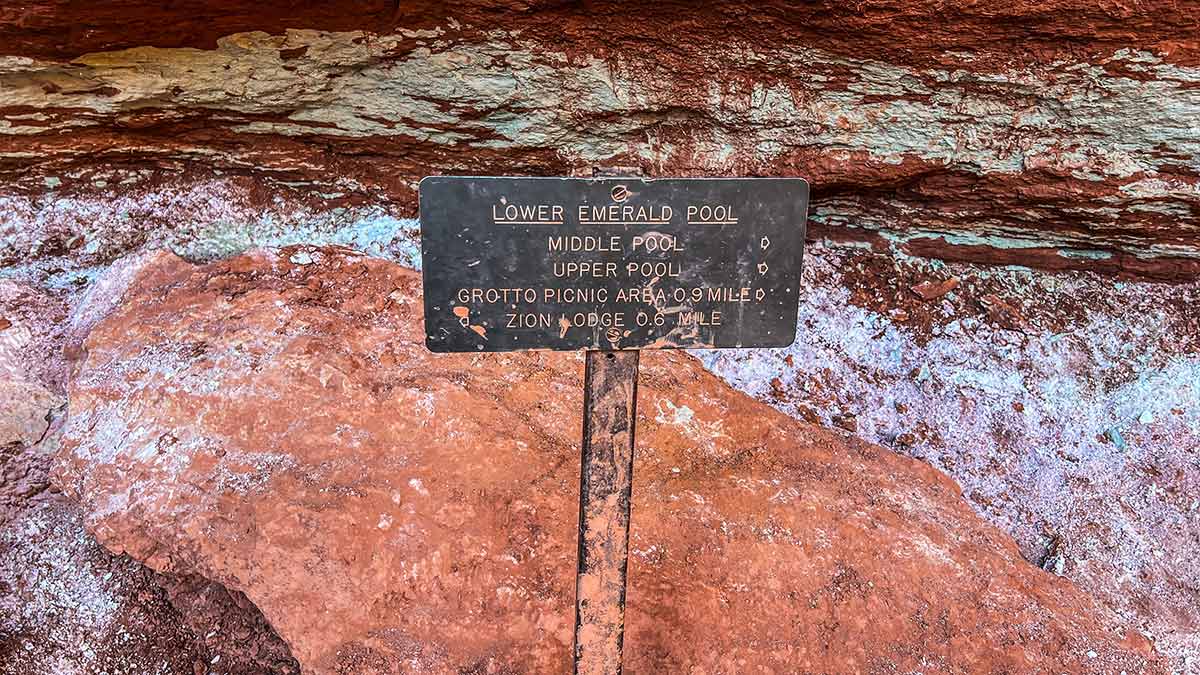
We reached the Emerald Pools trail around 12:30 p.m. The Lower Emerald Pool is about 1.2 miles round trip and is considered the easiest section. It takes you to a small waterfall and pool beneath a rock overhang.
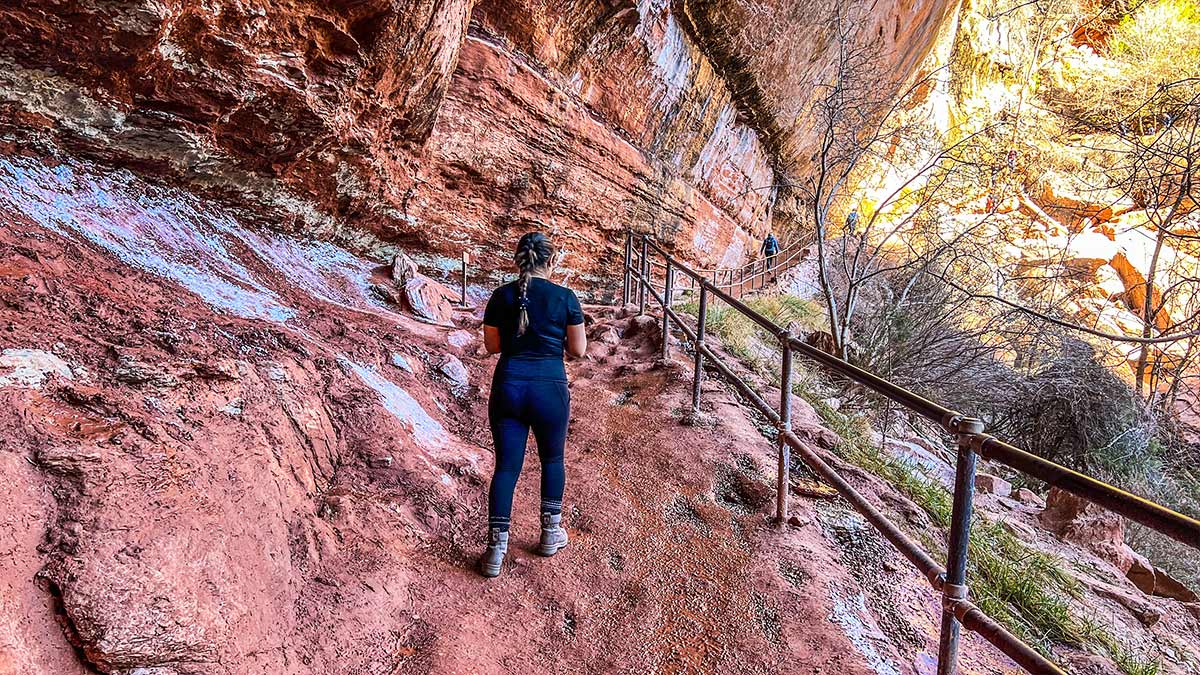
Water seeps through the sandstone above, especially after rain, creating the “emerald” effect from algae and reflected light. Standing underneath the dripping rock, with sunlight breaking through the canyon walls, felt like stepping into a hidden pocket of the park.
Middle and Upper Emerald Pools
The Middle Pool adds elevation and opens up wider views back toward the canyon floor. The trail becomes more uneven, and you start to feel the climb.
The Upper Emerald Pool sits in a more enclosed amphitheater of rock. Getting there requires steady hiking over rocky terrain, but standing beneath those high sandstone walls makes it worth it. Zion’s cliffs are primarily Navajo Sandstone, formed from ancient sand dunes that hardened into rock during the Jurassic period, roughly 190 to 160 million years ago.
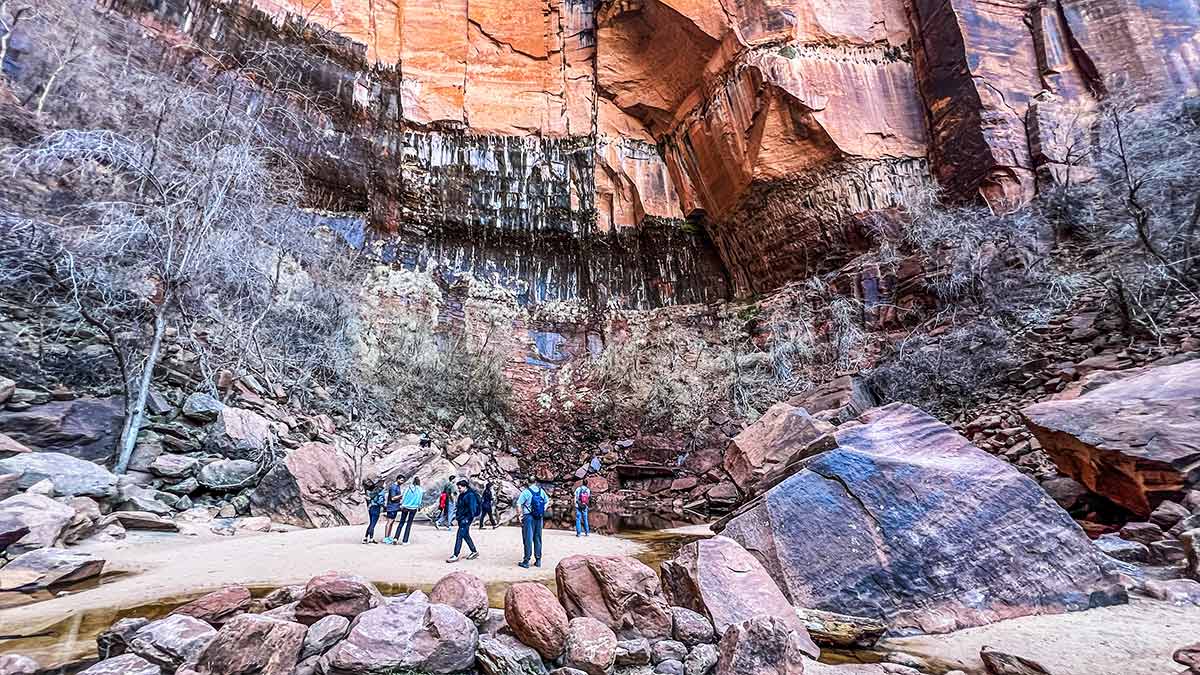
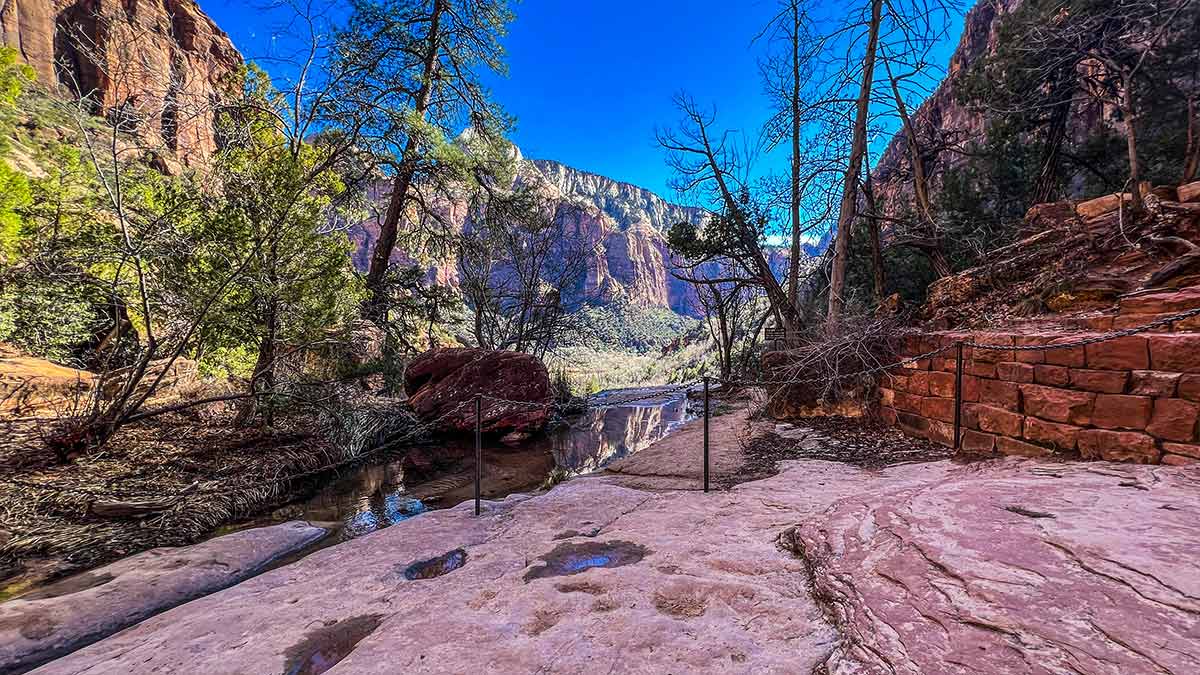
Knowing that the walls towering above were once desert dunes changes how you look at them. This entire canyon used to be sand.
“Standing under those cliffs makes you feel small in the best way. It’s humbling, but also grounding, like you’re standing inside something far older than anything you’ve known.”
The Long Walk Back
By the time we completed the upper, middle, and lower sections, it was around 2:00 p.m. We had already put in miles, and we still had to walk 2.8 miles back down the scenic drive to our car.
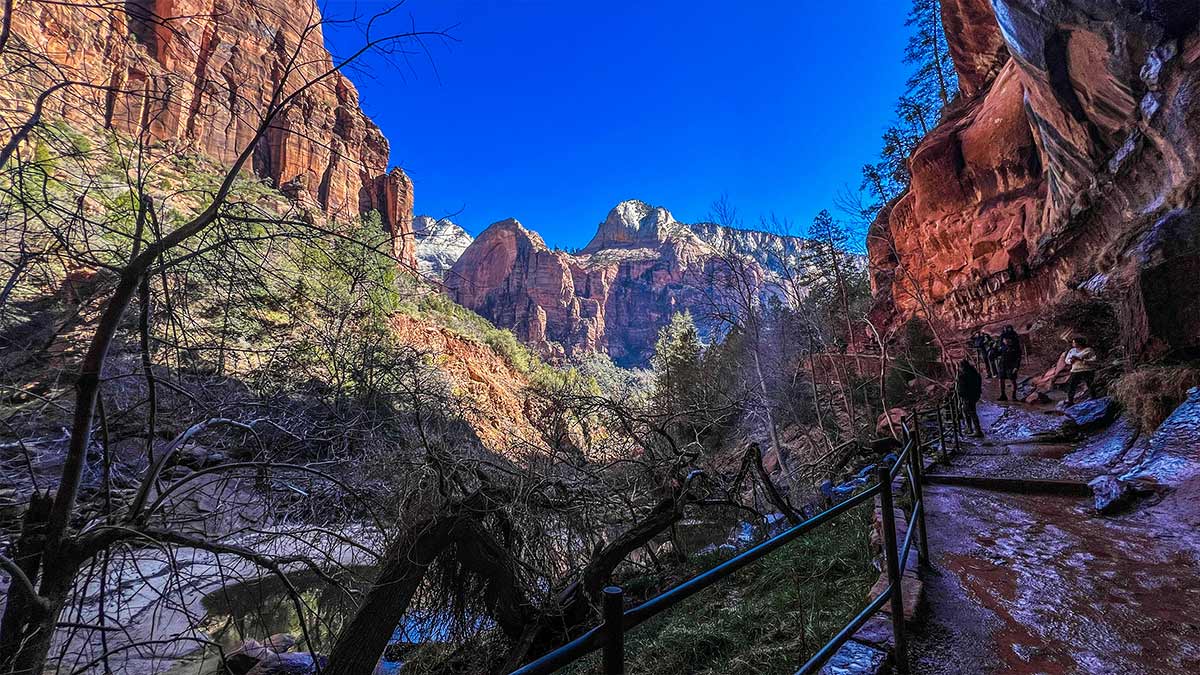
The return felt longer, but the views never got old. Every turn revealed another formation. Cottonwoods lined the river. Massive walls stretched thousands of feet above us. The scale never felt normal.
Driving to Temple of Sinawava
We reached the car around 3:00 p.m., and by then the Scenic Drive had reopened to vehicles. We took full advantage of it.
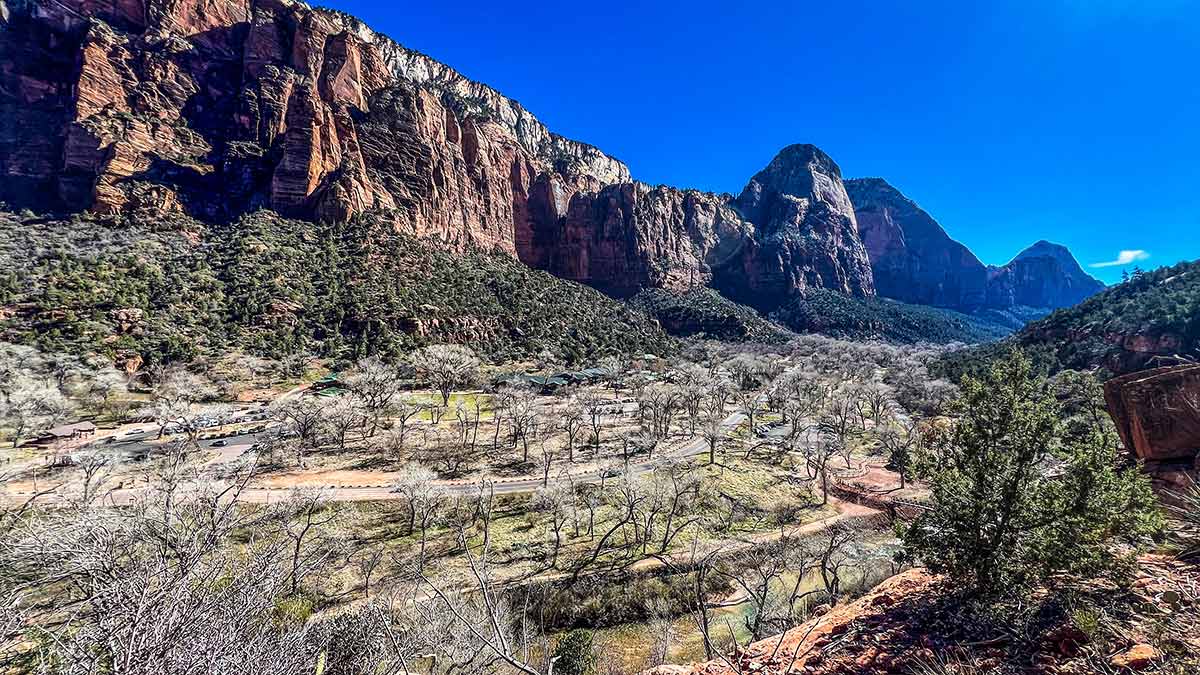
Zion Canyon Scenic Drive stretches about 7.1 miles one way, ending at the Temple of Sinawava. The drive is slow and majestic. Massive formations rise on both sides. You pass The Great White Throne, Angels Landing, and towering cliffs that look sculpted rather than formed.
Angels Landing in the Distance
Along the Scenic Drive, Angels Landing stands out immediately. Its narrow spine and steep drop offs make it one of the most iconic and challenging hikes in the United States. The trail climbs 1,488 feet over about 5.4 miles round trip and includes a final section with chains bolted into the rock to help hikers navigate the exposed ridge.
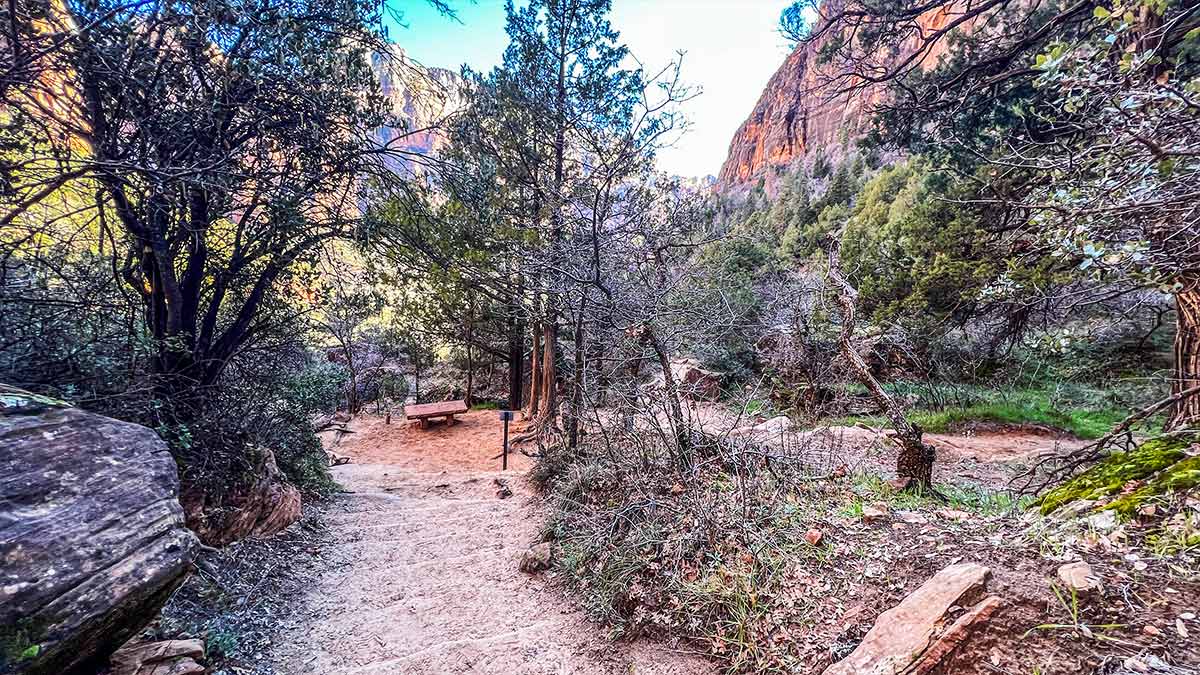
We did not attempt Angels Landing this time, especially since it now requires a permit system for the final chained section, but seeing it in person adds perspective. From below, it looks dramatic and almost unreal, a natural fin of sandstone rising sharply above the canyon floor.
The Narrows: A Choose Your Own Adventure
At the Temple of Sinawava, the canyon narrows dramatically. This is the starting point for The Narrows, one of Zion National Park’s most famous hikes. The Narrows takes hikers directly into the Virgin River, walking upstream between towering canyon walls that can rise over 1,000 feet above while the river itself narrows to only 20 to 30 feet wide in places.
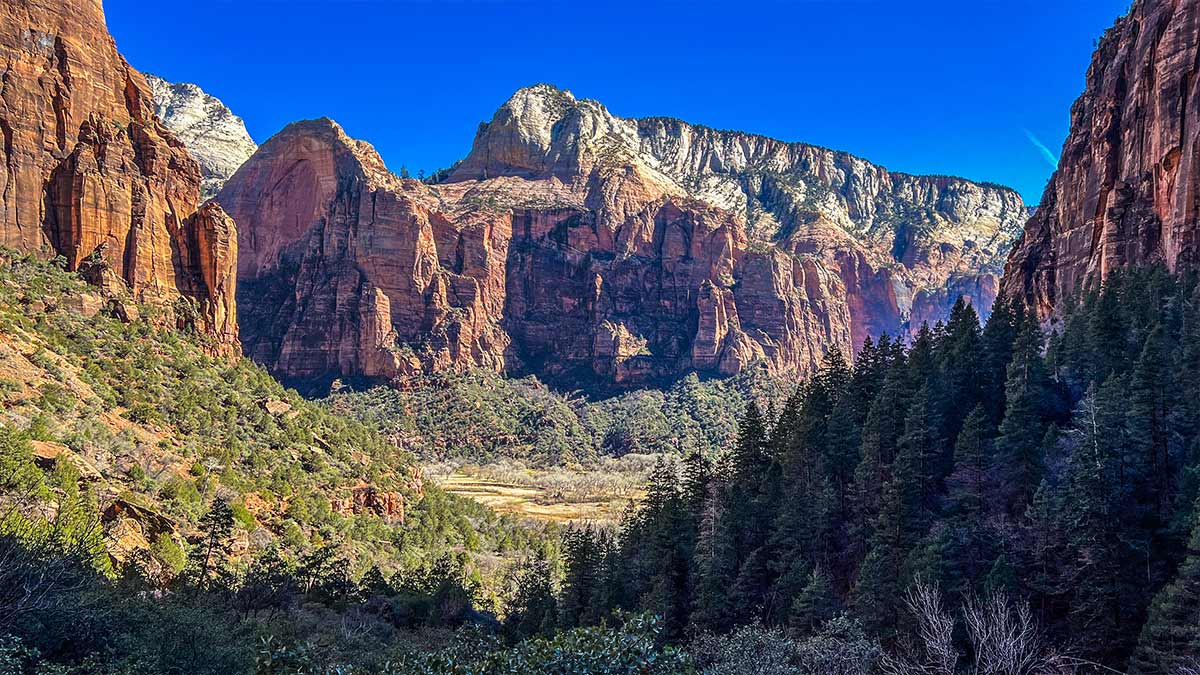
The standard bottom up route begins with the Riverside Walk, a paved one mile trail that leads to the river entry point. From there, you are hiking in the water itself. There is no fixed turnaround unless you are doing the full top down 16 mile through hike with a permit. For most visitors, it becomes a choose your own adventure experience. You hike upstream as far as you feel comfortable, then turn back whenever you want.
Depending on pace and water levels, many hikers spend two to six hours exploring sections like Wall Street, where the canyon becomes extremely narrow and the rock walls rise almost vertically on both sides. Flash flood risk is always a factor, which is why checking conditions before entering the river is essential.
We did not hike The Narrows this time, but standing at the entrance and seeing the canyon tighten was enough to understand why it is legendary.
“Next time, we’re doing The Narrows. After seeing how tight the canyon gets, it feels like something you have to experience at least once.”
Why It’s Called Temple of Sinawava
The Temple of Sinawava marks the end of Zion Canyon Scenic Drive and the beginning of The Narrows. The name comes from Sinawava, the Paiute coyote god, often associated with creation and transformation in Southern Paiute mythology.
Early park officials adopted the name as part of a broader effort to give Zion National Park’s towering formations dramatic and spiritual sounding titles. The word “temple” reflects the cathedral like scale of the canyon walls at this point, where the cliffs rise high and close in dramatically.
Standing there, with the canyon narrowing and the river flowing into shadow, the name feels fitting. It is not just the end of the road. It feels like an entrance into something deeper.
Zion Canyon Brew Pub Stop
After a full day of walking and hiking, we stopped at Zion Canyon Brew Pub around 4:00 p.m. It felt like the perfect reset after the miles, especially because this place is a brew pub first, which means the beer is a real part of the experience, not just an afterthought.
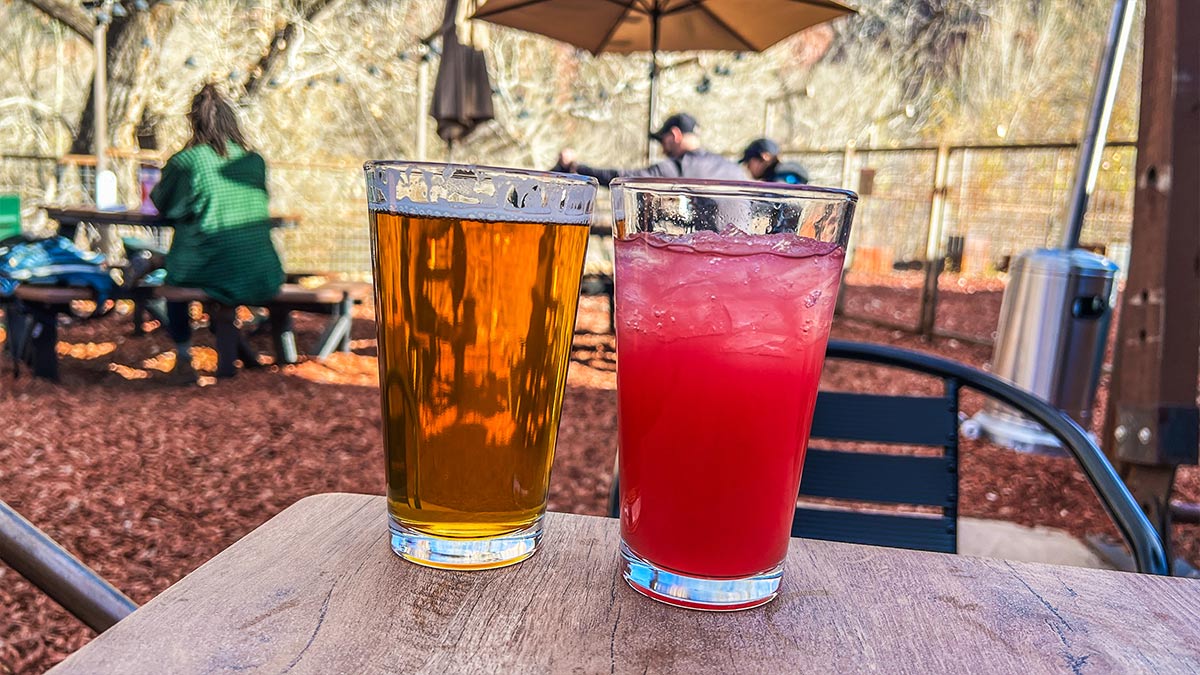
I ordered the Echo Canyon IPA, described as having a pronounced tropical aroma and flavor, balanced with a light malt body and a piney hop bitterness. After hours in Zion National Park, that first sip tasted like the day finally slowing down.
For food, I went with the IPA Sriracha Glazed Chicken Club, stacked with bacon, cheddar cheese, IPA-Sriracha sauce, and garlic aioli on toasted ciabatta.
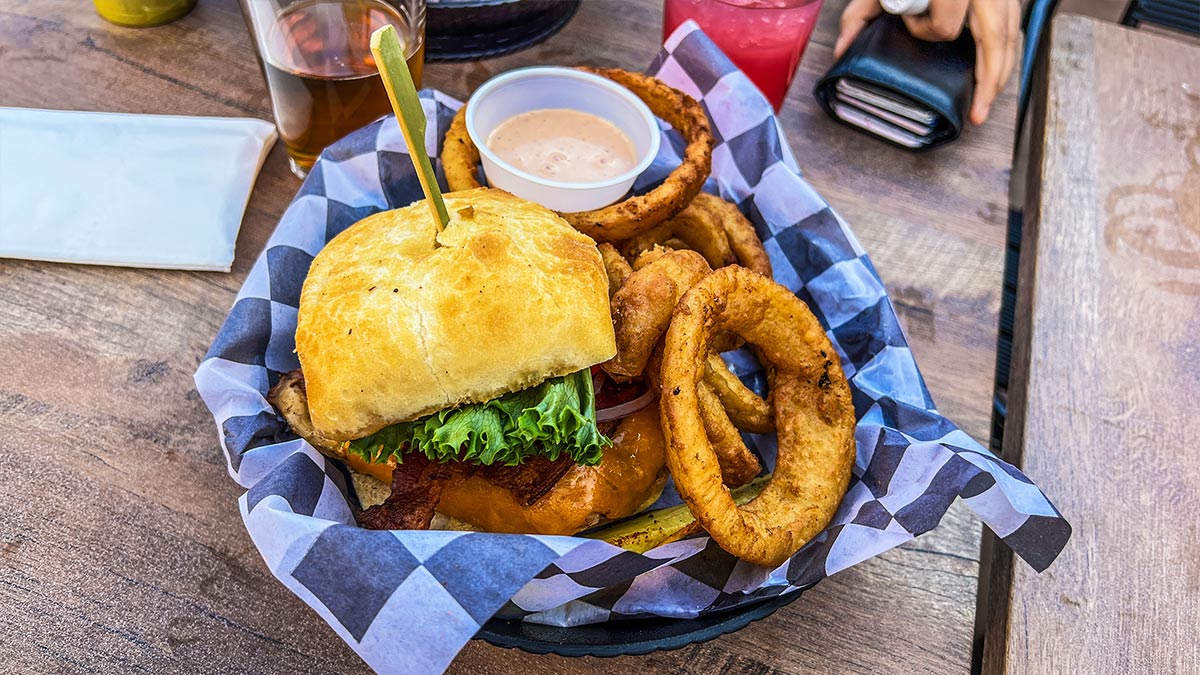

Destony ordered a Prickly Pear Lemonade and the Elevated Elk Burger, made with a locally sourced elk patty, Utah fry sauce, AMBER sautéed mushrooms, Swiss cheese, and salt and vinegar fried onions.
Sitting outside with canyon walls in the distance, cold drinks on the table, and food finally in front of us made it feel like the day was wrapping up exactly how it should.
Driving Back to Las Vegas
We left Zion around 5:30 p.m. The drive back took about three and a half hours, with a stop at Costco for gas in St. George. Because of the time zone difference, we got home around 8:00 p.m.
In a single day, we walked miles of canyon floor, climbed to emerald pools, drove beneath towering cliffs, and stood at the entrance to one of the most famous hikes in the country. Three hours from Las Vegas, yet it feels like another world entirely.
The History and Formation of Zion National Park
Zion became a national park in 1919, though it was first protected as Mukuntuweap National Monument in 1909. The name “Zion” was given by Mormon settlers who described the canyon as a place of refuge or sanctuary.
The geological story goes back much further. Southern Utah’s dramatic landscapes do not stop at Zion. Places like Bryce Canyon National Park showcase entirely different rock formations, while still sharing the same deep geological history tied to the uplift of the Colorado Plateau. The rock layers visible throughout the canyon represent millions of years of Earth’s history. The dominant Navajo Sandstone formed from vast desert sand dunes during the Jurassic period. Over time, tectonic uplift raised the Colorado Plateau, and as the land rose, the Virgin River began cutting downward, carving the deep canyon we see today. That same uplift shaped much of eastern Utah as well, including the rugged terrain around Moab, where red rock formations rise from high desert plateaus instead of narrow river canyons.
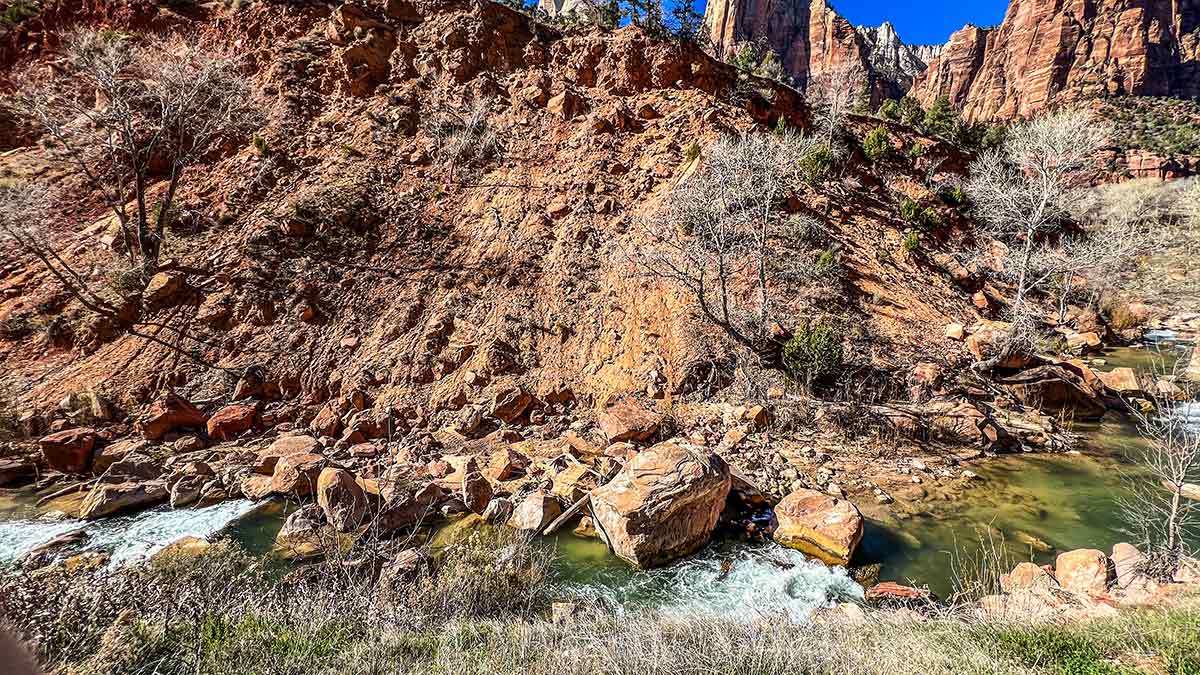
Flash floods continue to reshape the canyon. Freeze thaw cycles crack rock faces. Rockfalls remind visitors that Zion National Park is still evolving.
Indigenous peoples lived in this region for thousands of years before it became a national park. The Ancestral Puebloans and later the Southern Paiute have deep historical ties to this land. Zion National Park is not just a scenic destination. It is layered with cultural and geological history.
Address:
1 Zion Park Blvd.
Springdale, UT, 84767
Hours:
Open 24 hours a day, 7 days a week, year-round.
Phone:
(435) 772-3256









TALK TO THE AUTHOR
If you’ve spotted something we missed, found a typo, or have any suggestions,
we’d love to hear from you!