

A flickering glow of red sandstone spreads across the Nevada desert like embers. Less than a day’s commitment from Las Vegas, Valley of Fire State Park turns a simple desert drive into a landscape of twisting sandstone, ancient petroglyphs, roadside formations, hiking trails, and wide-open views.
The colors are what grab you first. The longer you stay, though, the more you realize there is much more here than red rock. Valley of Fire works as a scenic drive, a hiking destination, a camping trip, or an easy addition to a longer day exploring Overton and Moapa Valley.
2026 access note: Valley of Fire’s West Entrance is temporarily closed Monday through Thursday during construction expected to continue through the end of 2026. The West Entrance remains open Friday through Sunday. Monday through Thursday visitors should enter from the east via State Route 169 or State Route 167 and confirm the latest Nevada State Parks notice before leaving Las Vegas.
Valley of Fire State Park: Nevada’s Red Rock Escape
Nearly one million visitors come through Valley of Fire in a typical year, but the park still has moments when the desert feels enormous and surprisingly quiet. Established in 1935, Valley of Fire is Nevada’s oldest state park and one of Southern Nevada’s most recognizable landscapes.
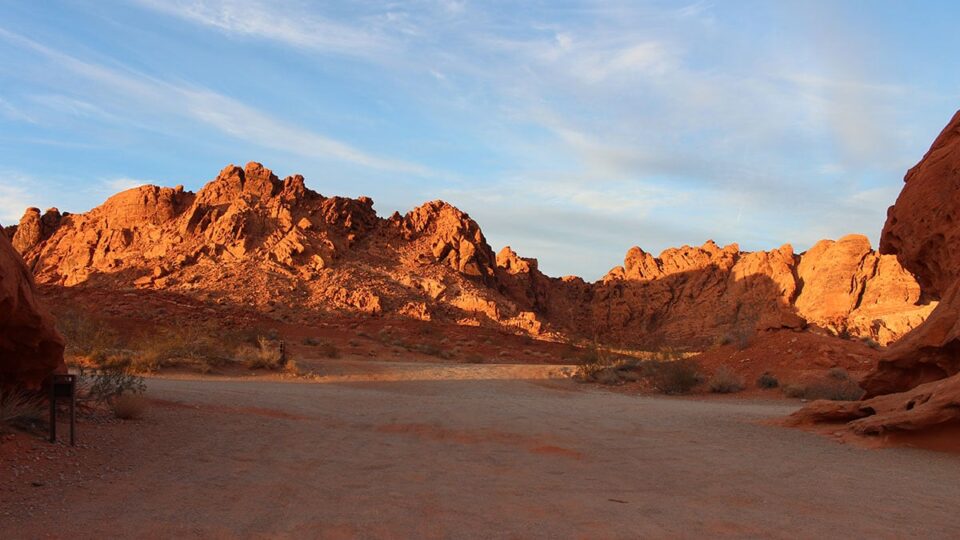
Valley of Fire isn’t just a name—it’s a visual experience. Reds, oranges, cream-colored layers, and deep rust tones run through formations that twist, rise, and disappear into the desert. Morning and evening light exaggerate the shapes even further, turning an already dramatic landscape into something almost cinematic.
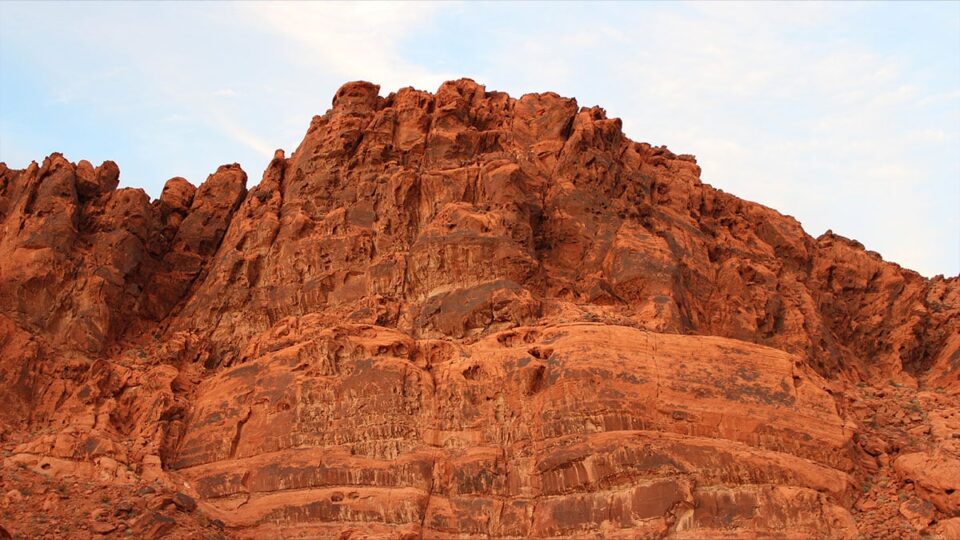
The air feels different here, too—dry and sharp, with long stretches where the sandstone and open sky seem to swallow everything around you.
Drive a few miles, and the landscape changes again. Mars? Maybe. But the real explanation begins hundreds of millions of years before any highway crossed this part of Nevada.
How Valley of Fire Was Formed
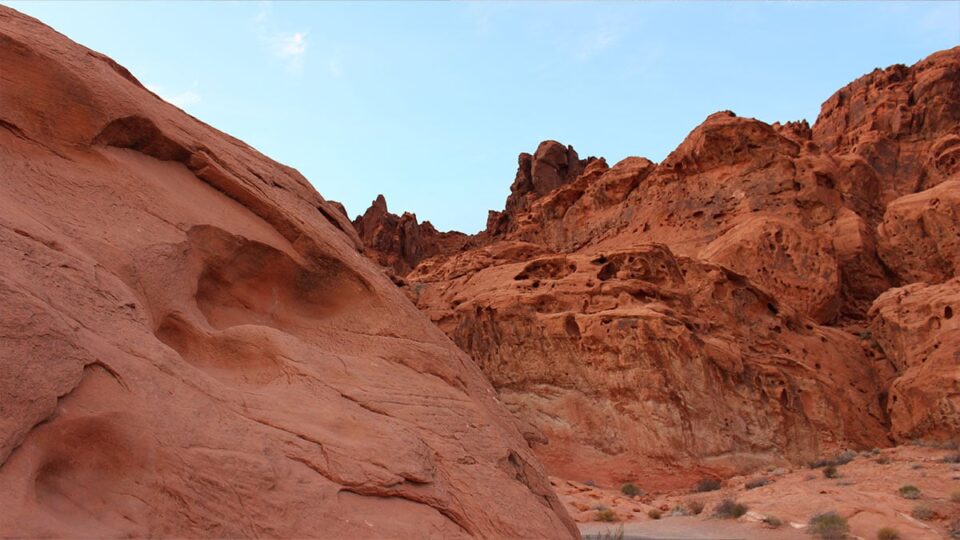
Valley of Fire’s signature red formations are primarily Jurassic-age Aztec sandstone. After inland seas receded and the land rose, enormous deposits of wind-blown sand remained behind. Over time, those deposits hardened into sandstone, while iron-bearing minerals contributed to the reds, oranges, and rust-colored surfaces that define the park today.
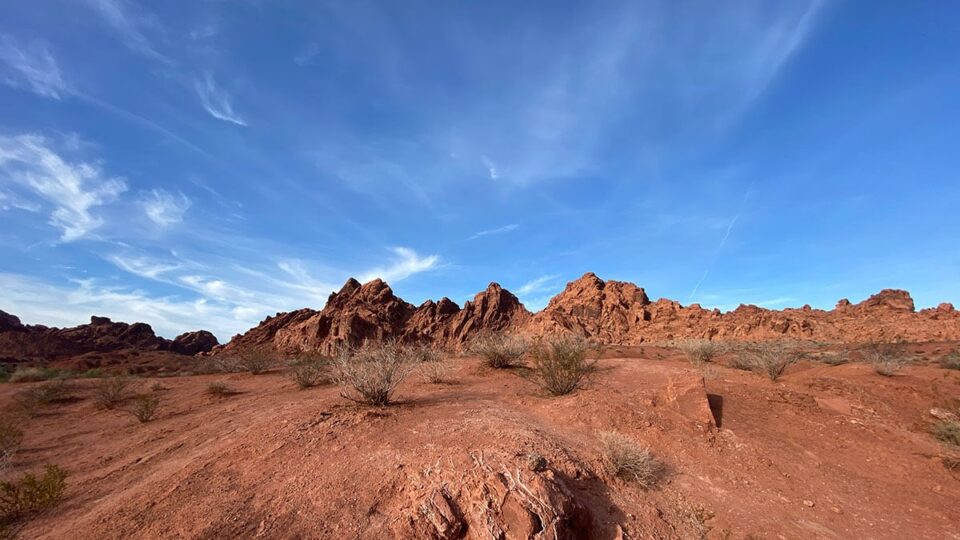
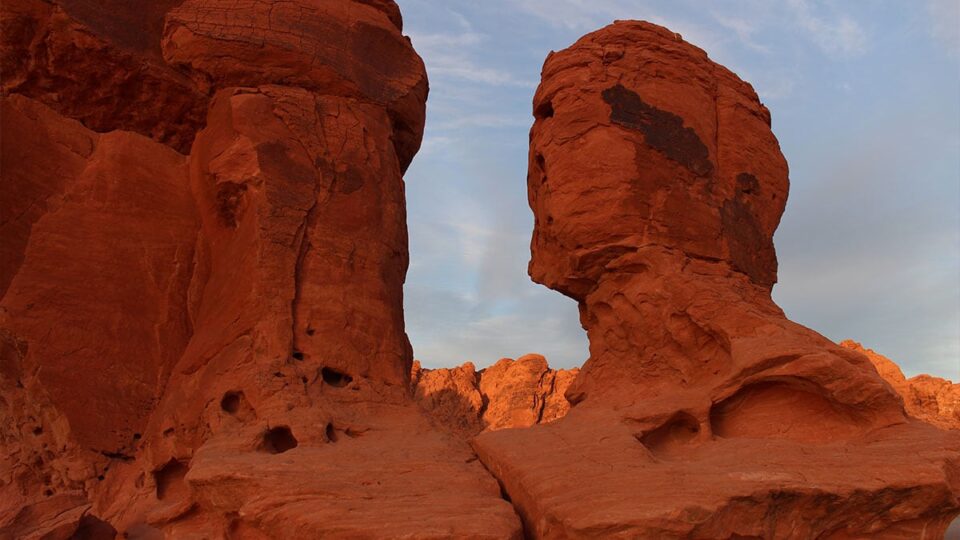
Erosion continued reshaping the sandstone long after it formed. Wind and water worked their way into weaker layers, carving ridges, arches, passages, bowls, and wave-like surfaces. Sunlight moves across those textures throughout the day, making the sandstone appear to change color from one stop to the next.
If landscapes shaped by Nevada’s mining and frontier history are more your speed, our Tonopah road trip shows another side of the state entirely.
Driving the Valley of Fire Scenic Roads
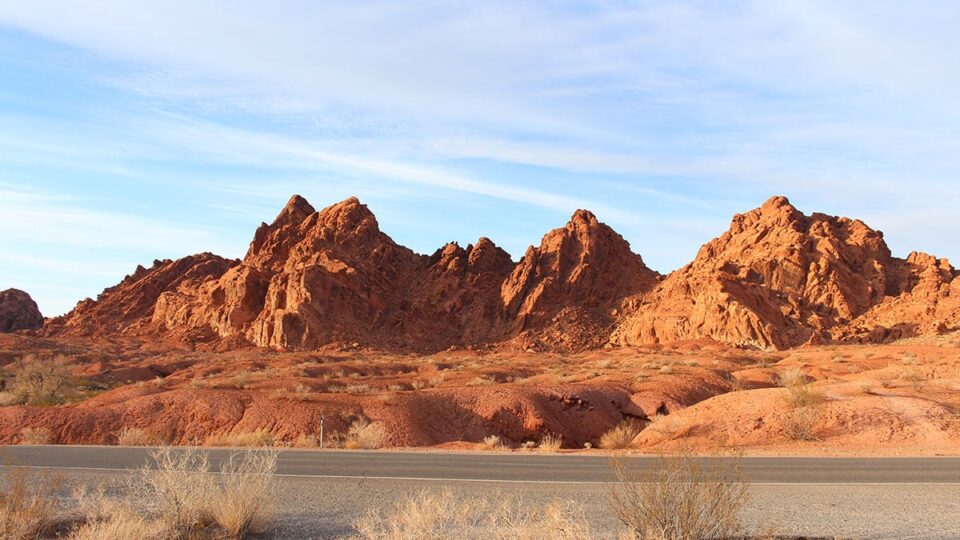
You do not need to be a serious hiker to understand why Valley of Fire is special. The drive itself is one of the park’s main experiences. Roads bend between red cliffs, open into broad desert valleys, and lead to short roadside stops where you can step out and explore without committing to a long trail.
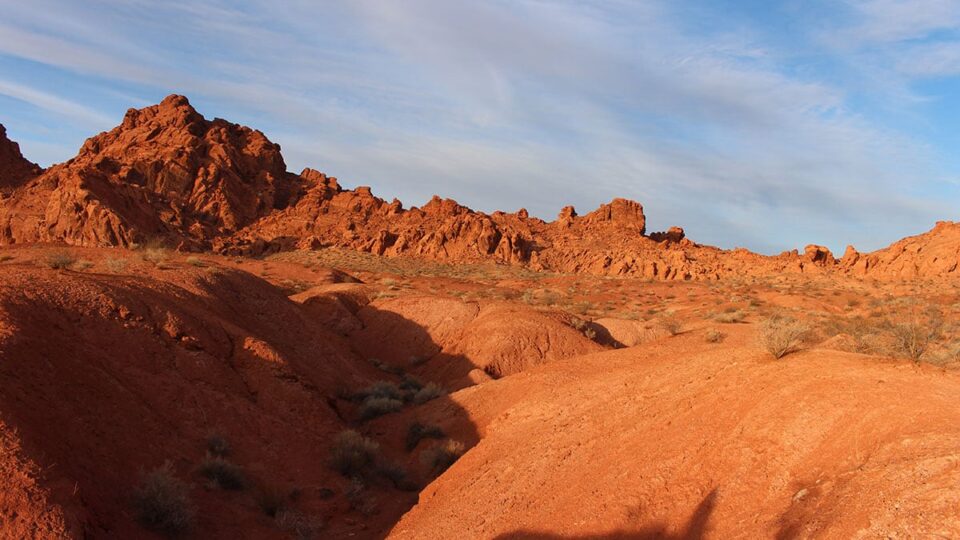
Take it slowly. The landscape changes constantly as the road climbs, turns, and drops through the sandstone. Morning light brings out the reds, while late-afternoon shadows create deeper contrast along the ridges.

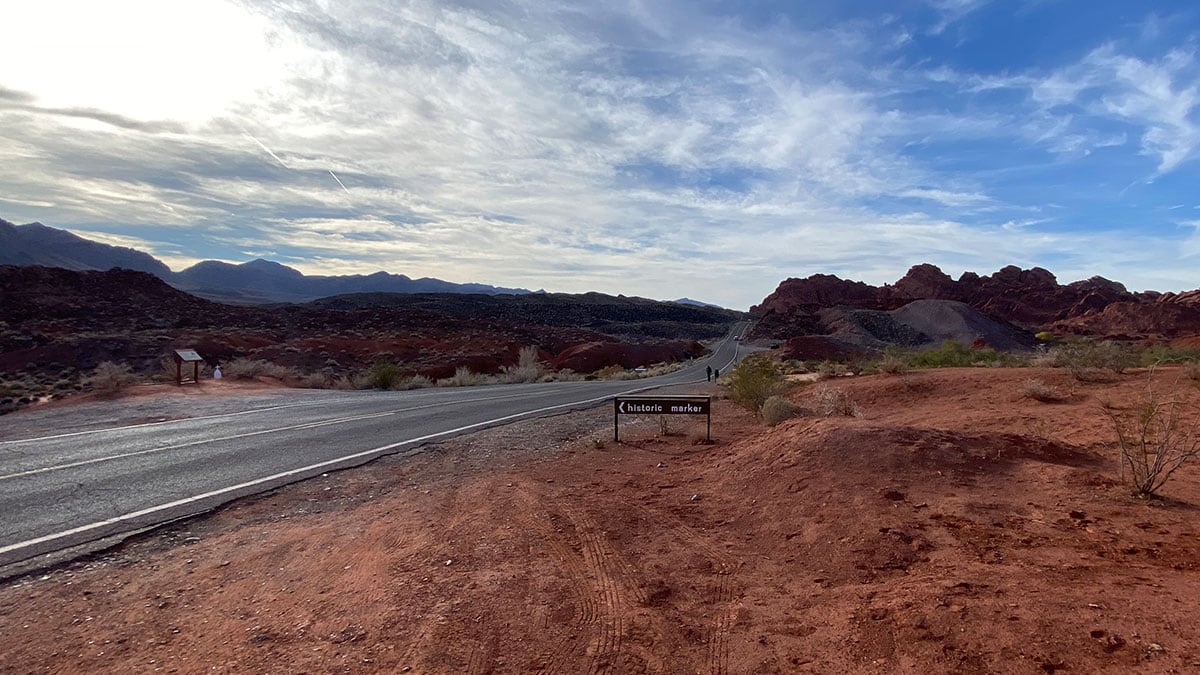
Elephant Rock, Rainbow Vista, Seven Sisters, the Cabins, and Atlatl Rock make easy additions to a scenic-drive itinerary. Some require only a short walk from the parking area, which makes Valley of Fire surprisingly flexible for families, photographers, road-trip travelers, and visitors who simply want the scenery without spending the entire day hiking.
If you want to continue the desert drive after Valley of Fire, Lake Mead adds blue water, shoreline roads, and another completely different Southern Nevada landscape.
Valley of Fire Hikes and Trails
Valley of Fire can become dangerously hot, and the park now closes a number of trails every year from May 15 through September 30. Fire Wave, White Domes, Seven Wonders Loop, Pastel Canyon, Prospect, Arrowhead, Pinnacles, Charlie Springs, and Natural Arches are among the seasonal closures.
Do not treat those closures as suggestions. Nevada State Parks enforces them because extreme heat has repeatedly resulted in search-and-rescue calls. Cooler months are the time to experience the park’s longer and more exposed hikes.
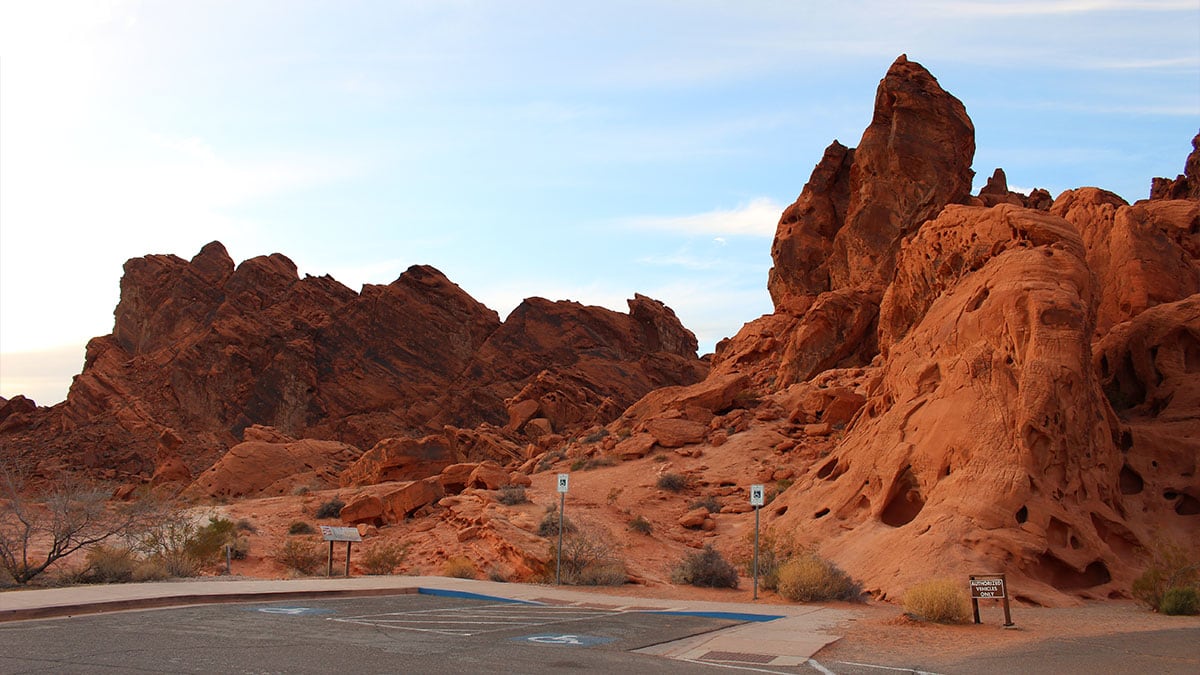
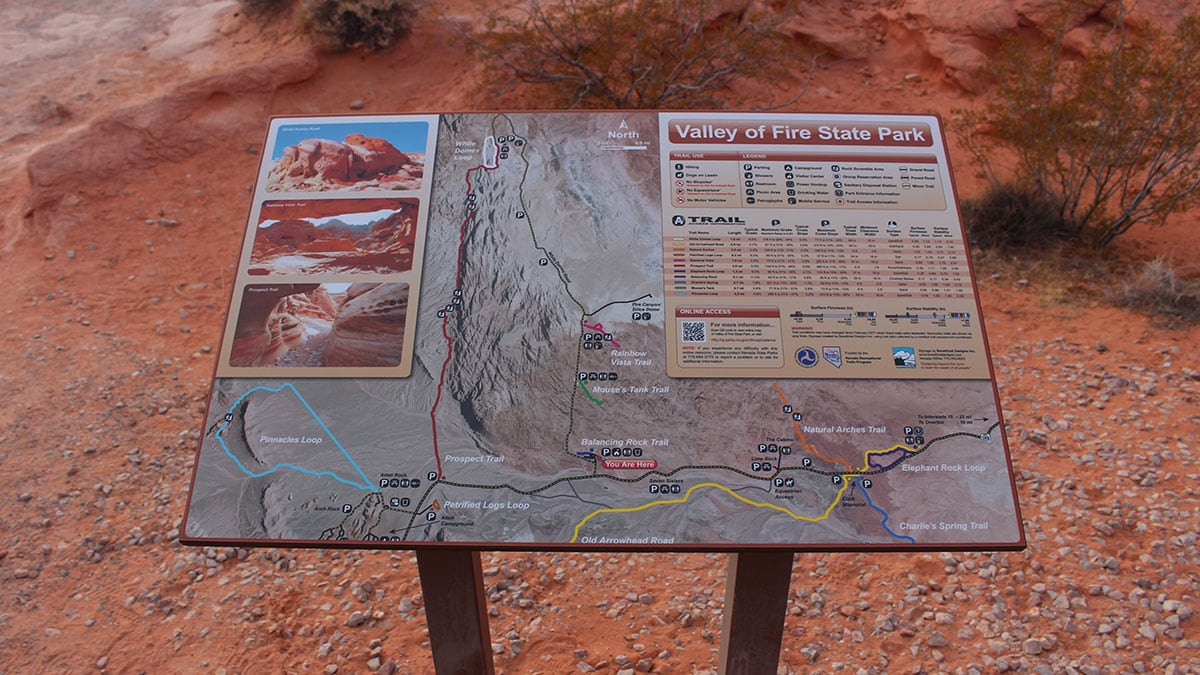
The Visitor Center is a useful first stop when it is open. Check conditions, study the park map, and decide what fits the weather and the amount of time you have available.

Mouse’s Tank Trail
Mouse’s Tank is a roughly 0.75-mile out-and-back route over sandy and uneven terrain. One of the biggest reasons to walk it is the concentration of petroglyphs along Petroglyph Canyon, connecting modern visitors with people who occupied this region long before Nevada existed as a state.
If ancient rock art interests you, Sloan Canyon and its petroglyphs offer another fascinating Southern Nevada hiking experience.
Fire Wave Trail
Fire Wave is one of Valley of Fire’s signature hikes, leading across striped sandstone where red and pale layers curve across the rock like frozen waves. It is also one of the park’s most heat-exposed destinations.
Seasonal note: Fire Wave Trail is closed annually from May 15 through September 30 because of extreme heat. Plan this hike for the cooler season and confirm current conditions before your visit.
White Domes Trail
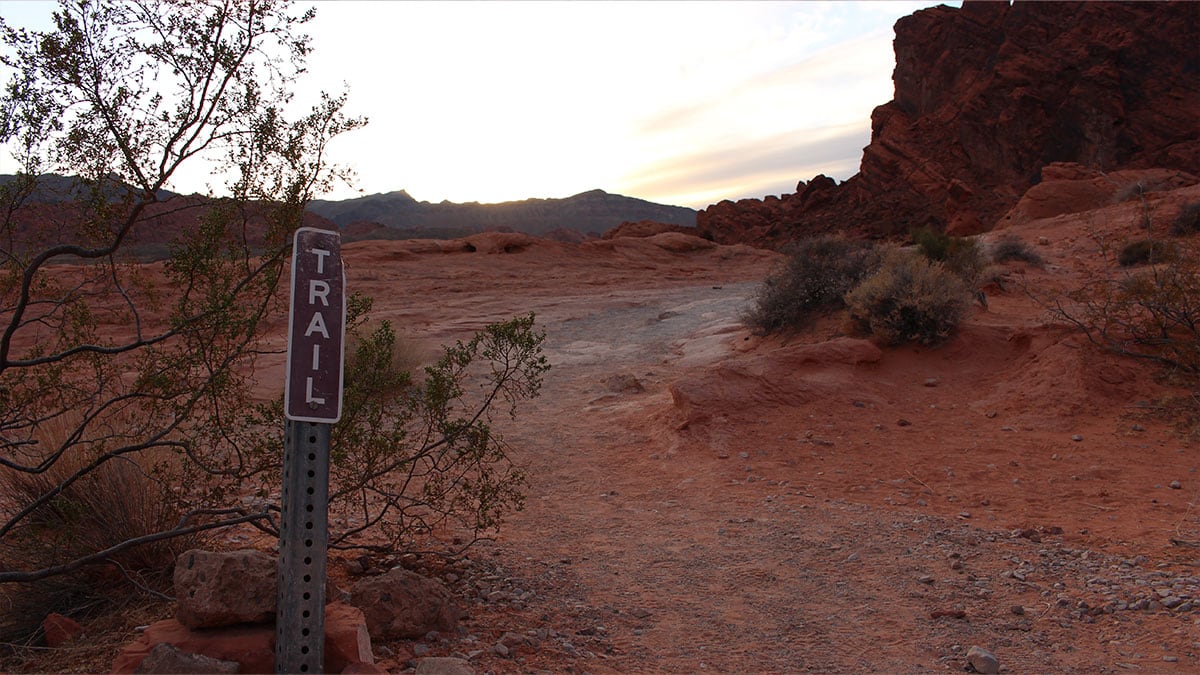
White Domes combines changing sandstone colors, narrow passages, open desert, and remnants associated with an old film location. The loop gives you several different Valley of Fire landscapes in a relatively compact hike.
Seasonal note: White Domes Trail is also closed annually from May 15 through September 30. During that period, follow Nevada State Parks guidance and choose accessible roadside areas or trails that remain open.
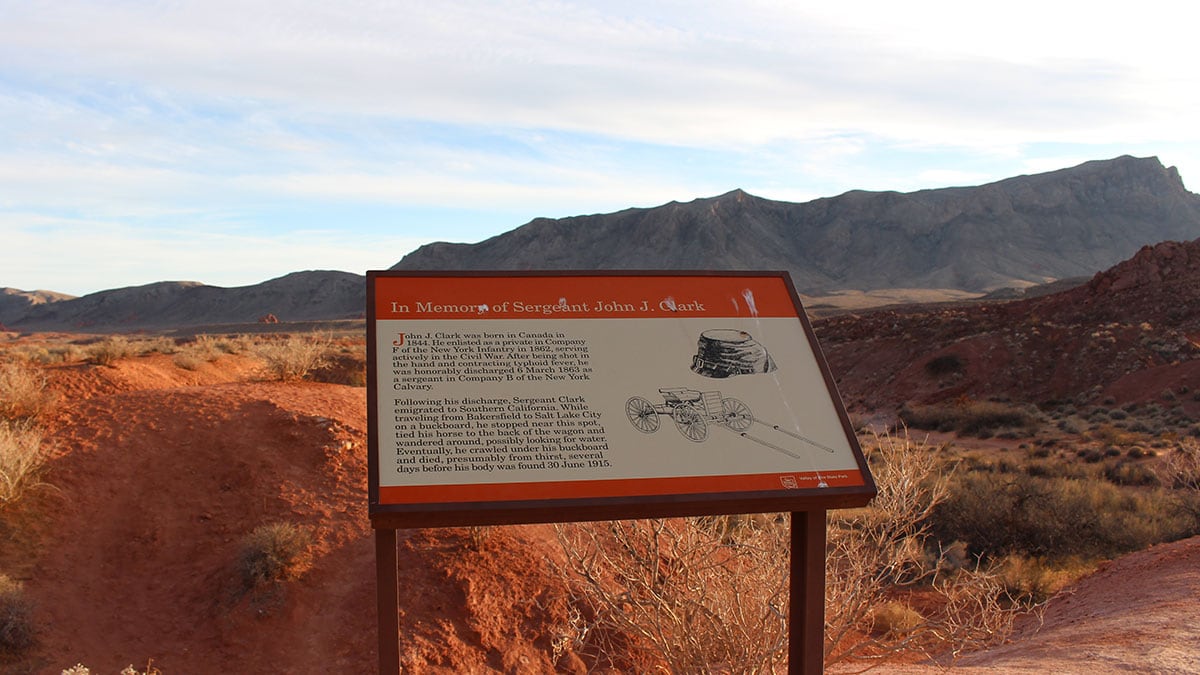
The Cabins: A Piece of Valley of Fire History
Three stone cabins remain inside the park as reminders of its early development. Built by the Civilian Conservation Corps in the 1930s, they were constructed using locally available sandstone and now sit naturally against the surrounding rock.

The cabins are one of those Valley of Fire stops where the human history and the landscape overlap. Step inside and the temperature, sound, and light change almost immediately.
For much deeper context on the people who lived in this region long before the park was established, continue into Overton and visit the Lost City Museum. Its archaeological collections make an excellent companion to the petroglyphs and desert history encountered at Valley of Fire.
Camping at Valley of Fire State Park
Camping changes the Valley of Fire experience completely. Once day-use visitors leave at sunset, campers get the quieter side of the park, surrounded by sandstone and dark desert sky.
Valley of Fire camping is now reservation-based. Current fees are $20 per vehicle per night for Nevada residents and $25 for non-Nevada vehicles, with an additional $10 charge for utility-hookup sites.
Atlatl Rock Campground
If you want a campsite with more amenities, Atlatl Rock is the more developed option. The campground includes RV utility-hookup sites, and the surrounding area provides access to shaded picnic facilities and restrooms.
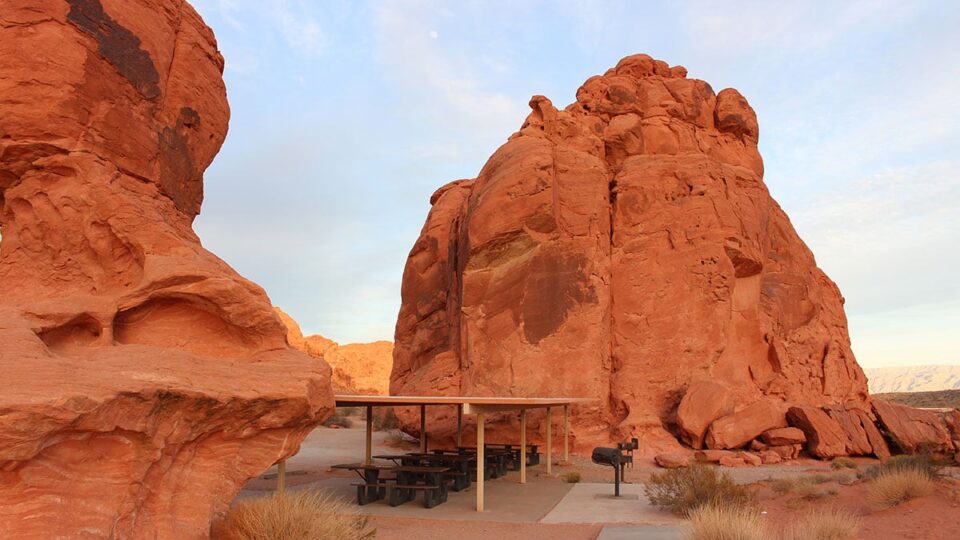
Nearby Atlatl Rock is also one of the park’s important petroglyph sites. A staircase provides a closer look at carvings on the sandstone, some associated with cultures that lived in this region thousands of years ago.
Arch Rock Campground
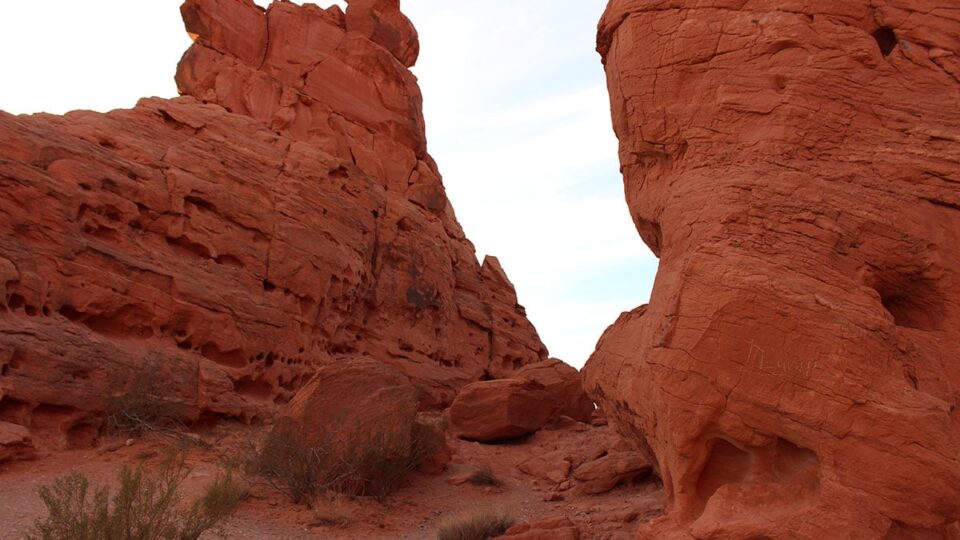
Arch Rock Campground offers a quieter desert setting with fewer developed amenities than Atlatl Rock. Valley of Fire camping is reservation-based, so do not count on arriving without a campsite booked in advance.
If wildlife is part of what you love about Southern Nevada, Hemenway Park in Boulder City offers a very different chance to see desert bighorn sheep with Lake Mead in the background.
Valley of Fire Entrance Fees, Hours and Trip Planning
Entrance: Valley of Fire State Park currently charges $10 per vehicle for Nevada residents and $15 per vehicle for vehicles registered outside Nevada.
Regular hours: The park is normally open from sunrise to sunset. Visitors who are not registered campers should be out of the park by sunset unless participating in an authorized after-hours program.
Annual maintenance closure: Valley of Fire closes completely from December 1 through December 14 each year. Camping and day use are unavailable during that closure.
Summer trail closures: Several popular hiking trails close annually from May 15 through September 30. Always check Nevada State Parks before setting out.
What to bring: Carry plenty of water and electrolytes, sun protection, sturdy footwear, and more water than you think you will need. Even short Valley of Fire hikes can feel considerably harder in heat and exposed terrain.
Wildlife: Desert bighorn sheep, reptiles, birds, and coyotes live throughout the surrounding desert. Observe wildlife from a distance and never feed or approach animals.
Making Valley of Fire a Day Trip From Las Vegas
Valley of Fire works beautifully as its own day trip, but it can also anchor a larger drive through northeastern Clark County. Pair the park with Overton and the Lost City Museum, continue toward Lake Mead, or save those stops for another weekend when you want more time outside the city.
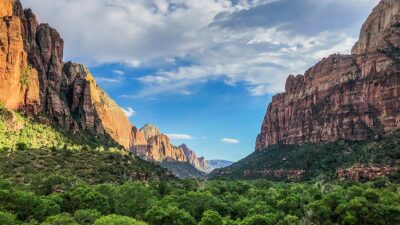
And if Valley of Fire leaves you wanting even larger sandstone walls, our Zion National Park day trip from Las Vegas takes the red-rock experience into an entirely different scale.
As you leave Valley of Fire, take one last look in the rearview mirror. The sandstone gradually shrinks into the desert and the reds begin to disappear behind you.
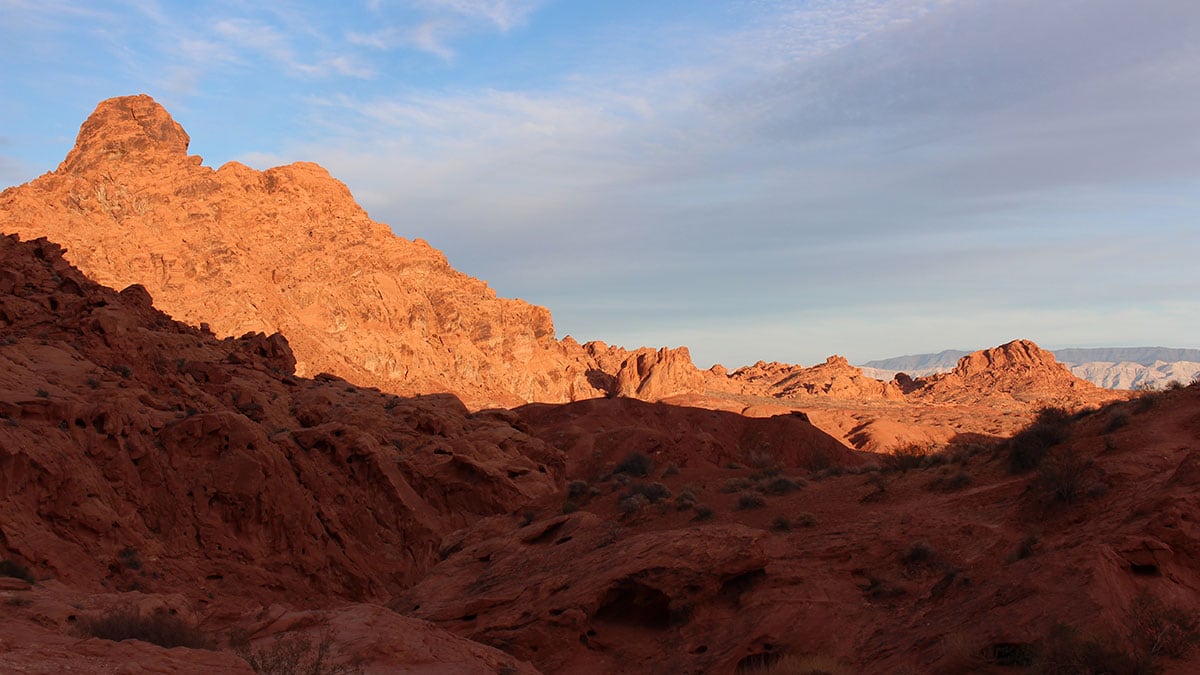
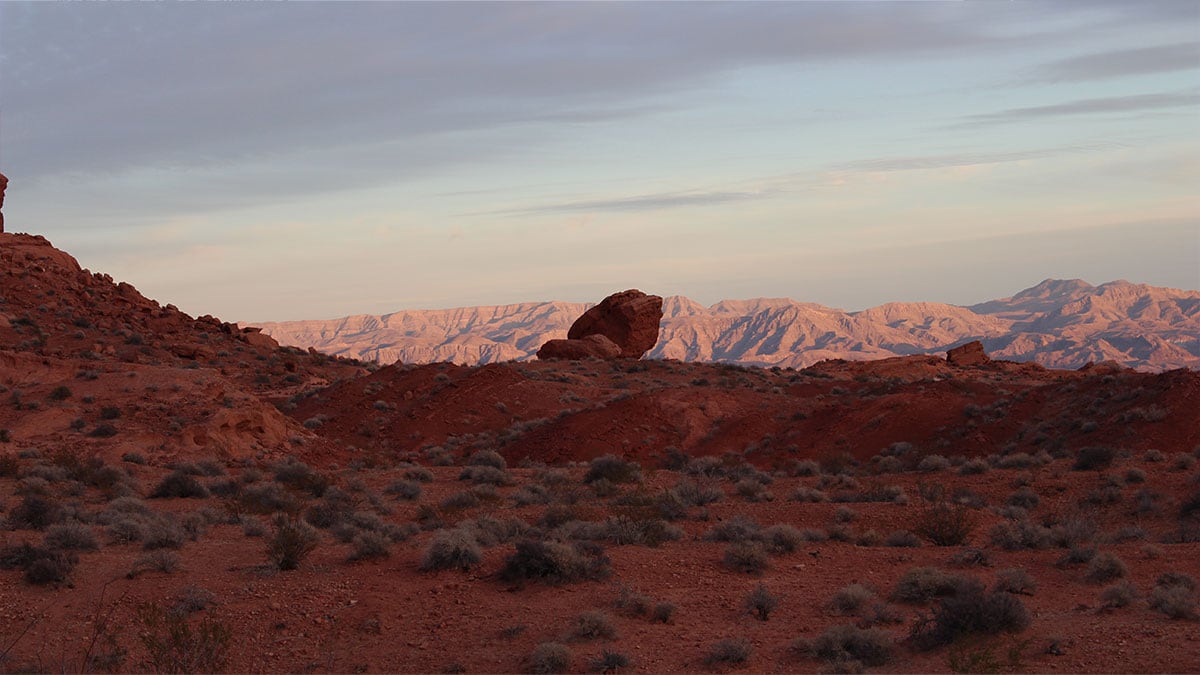
Valley of Fire is not the kind of place that needs complicated entertainment. The road, sandstone, silence, petroglyphs, and desert light do the work.
Pick a cooler day, check the current closures, give yourself more time than you think you need, and let Nevada’s oldest state park show you why it remains one of the most memorable road trips from Las Vegas.
Frequently Asked Questions
What are the current entrance fees for Valley of Fire State Park?
Valley of Fire currently charges $10 per vehicle for Nevada residents and $15 per vehicle for vehicles registered outside Nevada. Camping costs $20 per Nevada vehicle per night or $25 for non-Nevada vehicles, plus $10 for utility-hookup campsites.
What time does Valley of Fire State Park open and close?
Valley of Fire is normally open from sunrise to sunset. Visitors who are not registered campers generally must leave by sunset unless they are participating in an authorized park program.
Are Fire Wave and White Domes open during summer?
No. Fire Wave and White Domes are among the Valley of Fire trails that close annually from May 15 through September 30 because of extreme heat. Several other trails are included in the same seasonal closure.
Can you camp at Valley of Fire State Park?
Yes. Valley of Fire offers overnight camping, including RV utility-hookup sites at Atlatl Rock Campground. Nevada State Parks currently handles campsites by reservation, so visitors should book before arriving.
When is the best time to visit Valley of Fire State Park?
The cooler months are generally the most practical time for hiking and exploring Valley of Fire. Summer temperatures can become dangerously high, and several major trails are closed from May 15 through September 30. The entire park also closes annually from December 1 through December 14 for maintenance.








TALK TO THE AUTHOR
If you’ve spotted something we missed, found a typo, or have any suggestions, we’d love to hear from you!